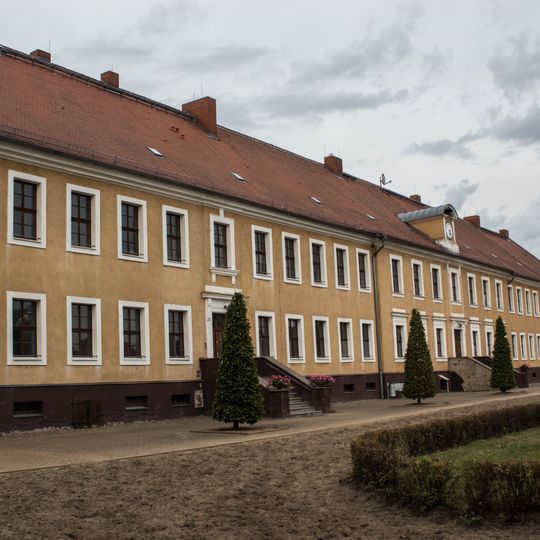
Haupt- und Landgestüt Neustadt an der Dosse, Horse stud farm and architectural monument in Neustadt, Germany.
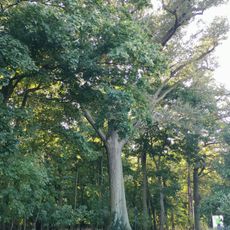
The Brandenburgisches Haupt- und Landgestüt Neustadt/Dosse consists of two four-sided courtyards built in early classicist style between 1788 and 1791: a breeding stud for 60 mares and a land stud for 100 stallions. A one-kilometre avenue with four rows of trees separates the two complexes, and tree-lined inner courtyards shape the grounds. The stud farm covers 400 hectares of paddocks, meadows and arable land.
Established by Friedrich Wilhelm II in 1788, it became one of the oldest and most important breeding institutions in Germany. The facility has maintained central importance for the development of German horse breeds throughout its history.
The name Friedrich-Wilhelmsgestüt recalls King Friedrich Wilhelm II, who founded the stud in 1788. Since 1922, stallion parades have presented the state-approved sires to breeders each year. Students at the Neustadt Prinz-von-Homburg-Schule can take riding as an elective using the stud's horses.
The site is conveniently located with good public transport access and ample parking for visitors. It is advisable to check ahead about ongoing events, as the facility hosts both regular visits and special competitions throughout the year.
The stud farm is self-sufficient, working 400 hectares of paddocks, meadows and arable land. Since 1978 it has also run a stallion testing station, and its own horses let pupils of Neustadt's Prinz-von-Homburg-Schule take riding as an elective subject.
The community of curious travelers
AroundUs brings together thousands of curated places, local tips, and hidden gems, enriched daily by 93,232 contributors worldwide.