Fortunabrunnen, denkmalgeschützte Brunnenanlage im Münchener Stadtteil Lehel
The Fortunabrunnen is a fountain on Isartorplatz in Munich's Lehel district, built in 1907 by sculptor Karl Killer. Its octagonal basin of red marble carries reliefs of agriculture, winegrowing and fishing on its eight sides. In the centre, on a stone pedestal, stands a three-metre bronze Fortuna holding a decorated cornucopia with both hands; small mermaids at her feet guard the water spouts.
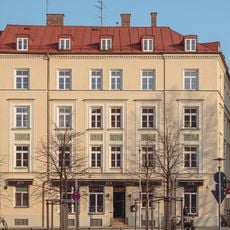
In 1896 the east side of Isartorplatz was rebuilt with five-storey rental houses, enlarging the square. In 1907 the city of Munich decided to place a fountain on the gained area; Karl Killer created it that year in Art Nouveau style. The sources record no war damage or later restoration.
The name Fortuna references the Roman goddess of luck and prosperity, a symbol that held special meaning for the growing city in the early 1900s. The reliefs depicting farming, wine-making, and fishing show how residents connected water and nature to their daily work and survival.
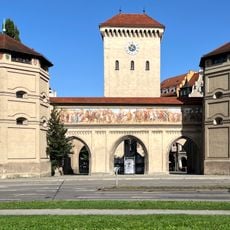
The fountain stands on Isartorplatz in the Lehel district, by the Isartor gate at the eastern edge of Munich's old town. The site is open and level, with the basin and figure visible from the surrounding pavement; the Isartor S-Bahn station lies a short walk away.
The fountain was commissioned in 1907 after the east side of Isartorplatz was rebuilt in 1896 with five-storey rental houses, enlarging the square; the city then decided to place a fountain on the new open area. Sculptor Karl Killer made the octagonal basin of red marble, and the three-metre bronze Fortuna was modelled by Andreas Manetsstätter.
The community of curious travelers
AroundUs brings together thousands of curated places, local tips, and hidden gems, enriched daily by 93,669 contributors worldwide.