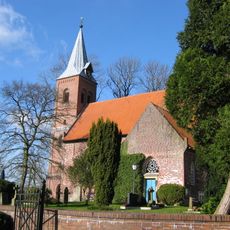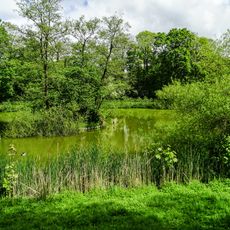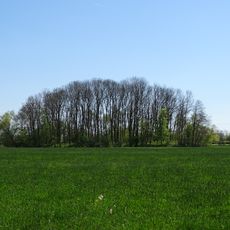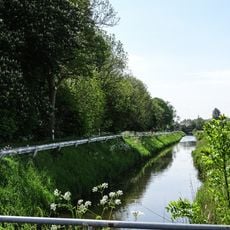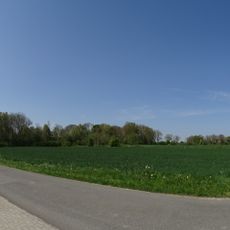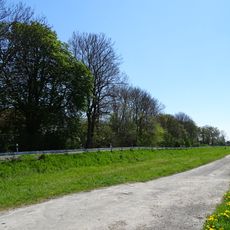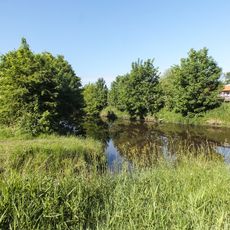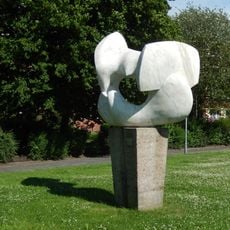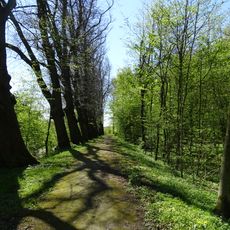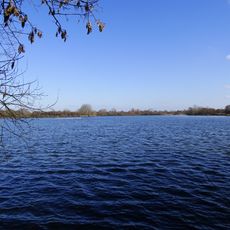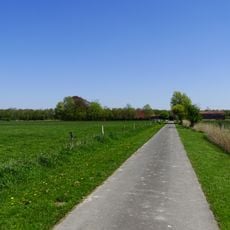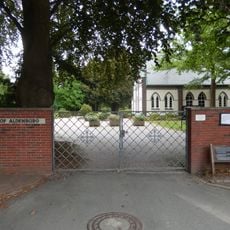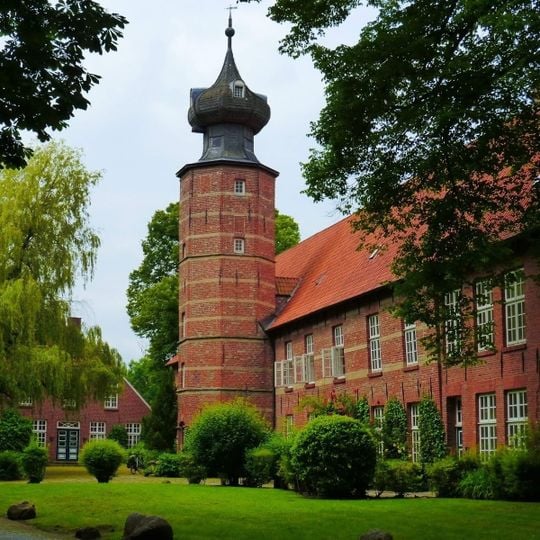
Burg Kniphausen, Medieval castle in Wilhelmshaven, Germany.
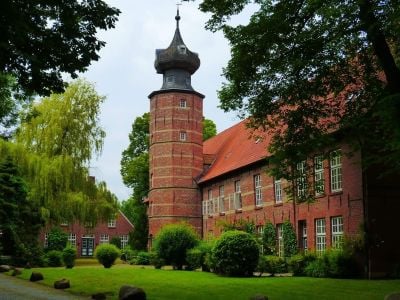
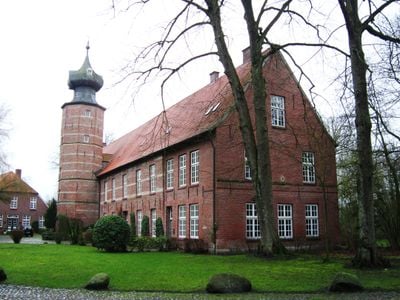
Burg Kniphausen in Fedderwarden, now part of Wilhelmshaven, consists of a red brick gatehouse from the 16th century and a two-storey former stable building (Marstall) from the second half of the 16th century with an octagonal stair tower. The main castle was destroyed by fire in 1708 and later demolished; only the outer moat, 15–20 m wide, and remnants of the southern and eastern bastions of the 1666/67 fortifications survive.
Burg Kniphausen grew out of Burg Knipens, which Lubbe Onneken acquired by marriage in 1433 and rebuilt around 1438 as his seat with a stone house and moat. Destroyed in the Saxon Feud of 1514, it was rebuilt as a palace complex completed in 1546 by his descendant Tido. In 1666/67 it was expanded into a fortress measuring 350 by 300 metres with four corner bastions.
The name Kniphausen comes from the Knipens stronghold, which Lubbe Onneken acquired by marriage in 1433. Today only the Ahnensaal and a few side rooms belong to the Stiftung Burg Kniphausen, which uses them for cultural events and exhibitions. The rest of the complex is privately owned.
The complex lies in Fedderwarden, in the north of Wilhelmshaven. Only the outer bailey with the gatehouse, the former stable building and two stable blocks survives; the main castle area is a raised mound with remains of moats and ramparts. The grounds are privately owned, and since October 2022 signs have prohibited walking on the property; cycling is now the only restriction.
The main castle was levelled in 1744 and its inner moat filled in; what stands today is the former stable block of the outer bailey, converted into the main building. The outer moat, 15 to 20 metres wide, and remnants of the south and east bastions of the 1666/67 fortification can still be traced in the ground.
The community of curious travelers
AroundUs brings together thousands of curated places, local tips, and hidden gems, enriched daily by 94,078 contributors worldwide.