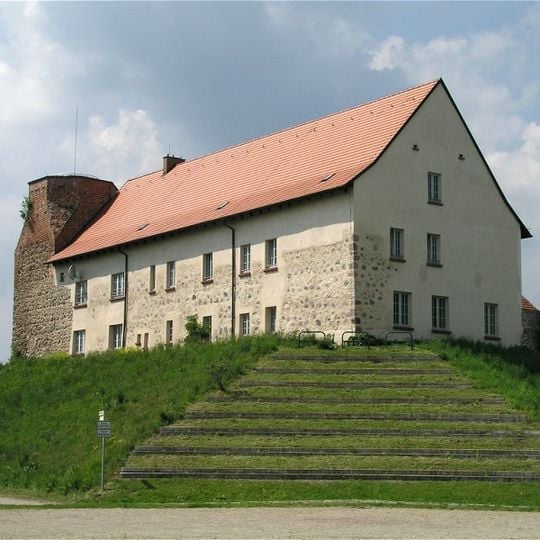
Wesenberg Castle, Medieval fortification in Wesenberg, Germany
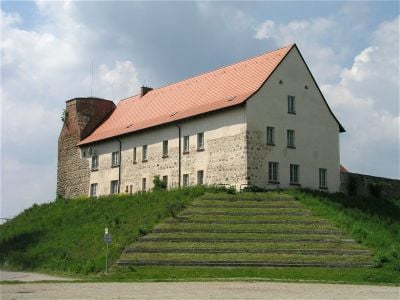
Wesenberg Castle is a motte-and-bailey castle on a hill in Wesenberg, Mecklenburg-Vorpommern. Only the bergfried, called Fangelturm, and an adjacent remnant of the ring wall survive. The tower has a flat top and abuts a section of rough stone wall, while the longer wing carries a steep orange-red tiled roof above a pale stone-and-plaster facade with small rectangular windows in two rows.
Nicholas I of Werle founded the castle in the mid-13th century to protect the town of Wesenberg. From 1276 it changed hands during the Mecklenburg-Brandenburg margrave wars, and it later served as residence for Catherine, widow of Duke Ulrich II. A fire around 1630 largely destroyed it; only the bergfried, called Fangelturm, and part of the southern wall survived.
The fortress shows how defensive structures developed in Northern Europe and changed over centuries. The main tower and ring wall tell the story of how building methods evolved from wood to stone.
The castle hill lies in the northeast of Wesenberg. Only the bergfried, called the Fangelturm, and a remnant of the ring wall on the south side survive, so there is no tower to climb. The building on the site houses the town's tourist information office and the local history room, which displays a collection on fishing, forestry and regional history.
The castle grounds passed to the ducal chamber in 1752, and in 1812 a Schulze was appointed as administrator. The original dwelling was replaced by a plain building that burned down twice and was rebuilt. After 1950 it housed the forestry administration, and today the castle holds the Wesenberg tourist office and a local history room with collections on fishing and forestry.
The community of curious travelers
AroundUs brings together thousands of curated places, local tips, and hidden gems, enriched daily by 93,367 contributors worldwide.