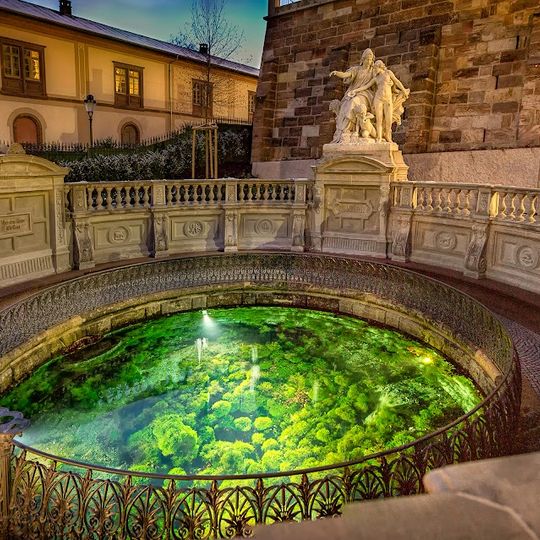
Source of the Danube, Spring and tourist attraction in Donaueschingen, Germany.
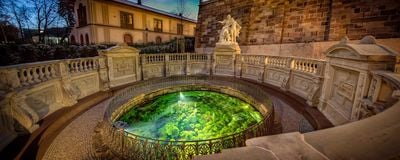
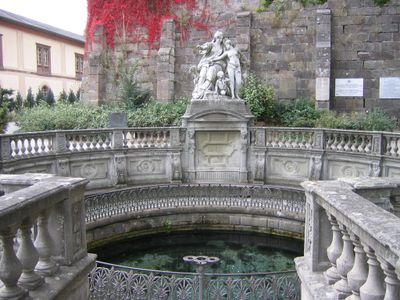
The Source of the Danube is a circular stone basin of dark water in the palace garden at Donaueschingen, enclosed by a low balustrade and a dark metal fence with arched and circular motifs. Above it, on a curved stone base inscribed "DONAUQUELLE", stands a white sculpture group: a seated draped woman holding a child, a smaller standing nude figure beside them, and a cherub at her feet.
Since the 15th century this spot has been recognized as the starting point of the second-longest river in Europe, flowing through ten countries. The present arrangement with basin and sculptures was created in the late 19th century on commission from the princely family.
Above the basin stands Adolf Heer's 1895 sculpture group "Mutter Baar", in which the Baar region is shown as a mother pointing her daughter, the young Danube, on her way. The seated draped woman holds a child, with a smaller standing nude figure beside them and a cherub at her feet. The base carries the inscription "DONAUQUELLE".
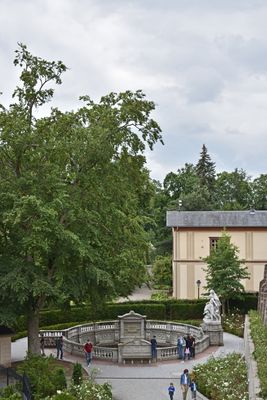
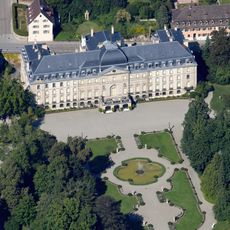
The spring sits in the Donaueschingen palace park, a short walk from the town centre; the Donaubach runs about 90 metres underground before reaching the Brigach. The basin is enclosed by a low metal fence above a stone wall, so it is viewed from the railing rather than approached directly.
The water emerges at a flow rate between 15 and 70 liters (4 to 18.5 gallons) per second and then travels 90 meters (295 feet) underground. Only after that does the stream meet the Brigach and both form the river that reaches the Black Sea.
The community of curious travelers
AroundUs brings together thousands of curated places, local tips, and hidden gems, enriched daily by 92,381 contributors worldwide.