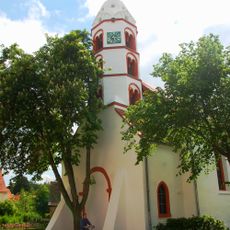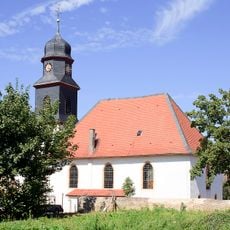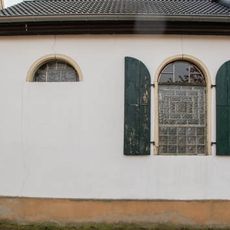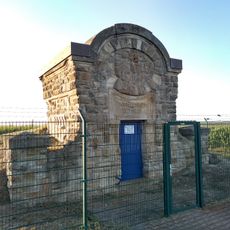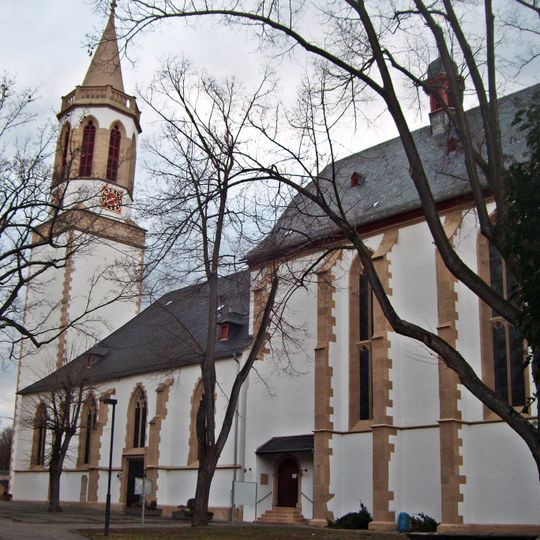
Simultaneous Church Gau-Odernheim, church building in Gau-Odernheim, Germany
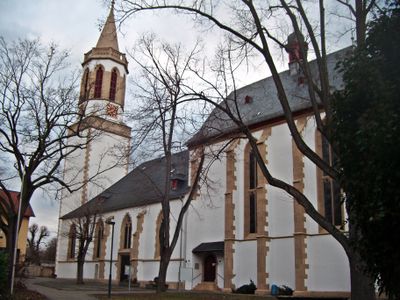
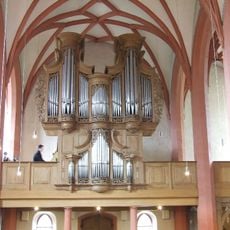
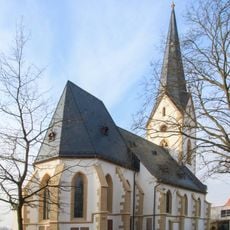
The Simultaneous Church Gau-Odernheim is a Gothic building from the early 15th century with two distinct sections separated by a wall, one for Protestant worship and one for Catholic services. The interior features typical Gothic elements such as pointed arches, eight-sided stone supports, and medieval wall paintings from the 14th and 15th centuries depicting biblical scenes and saints.
The building was constructed between 1415 and 1420, replacing an earlier church from Roman times, with relics of Saint Rufus attracting pilgrims since around 850. Following the Reformation in the 16th century, the church became shared between Protestant and Catholic communities, a division formalized by a wall in 1891.
The church is named after Saint Rufus, an early Christian bishop whose relics have been kept here since around 850 and drew pilgrims seeking blessings. Today it shows its cultural role through how Protestants and Catholics share the same building, each with their own worship space yet together maintaining its bells, towers, and community presence.
The church is divided into two separate sections with distinct entrances and worship areas, allowing visitors to see both the Protestant and Catholic sides and view the medieval artworks. The building is located centrally in town and is easily reached on foot, with paved paths around the structure and parking available nearby.
The church holds a special connection to an early bishop named Rufus through a carved stone chest from 1418 that once held his relics, believed by the faithful to hold healing powers. These relics were later damaged or lost during periods of conflict, and their exact location remains a mystery to this day.
The community of curious travelers
AroundUs brings together thousands of curated places, local tips, and hidden gems, enriched daily by 60,000 contributors worldwide.