Gustaf-Nagel-Areal, Cultural heritage site in Arendsee, Germany.
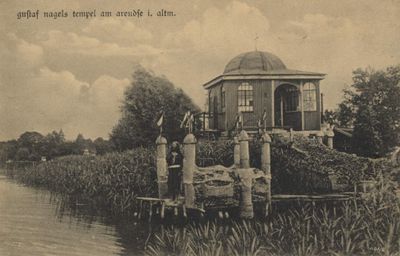
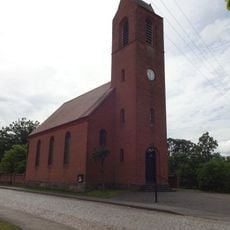
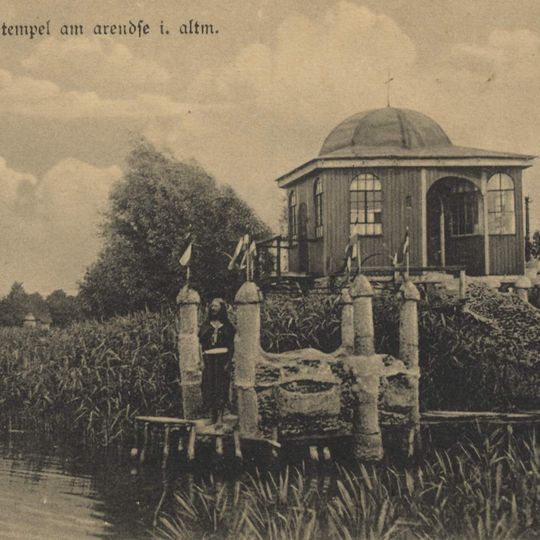
The Gustaf-Nagel-Areal is an early architectural complex situated on the steep bank of Lake Arendsee, featuring a distinctive polygonal hall. The structure combines expressionist design with red brick and prominent concrete pillars that appear to rise from the slope.
Gustaf Nagel established this property in 1910 as a space for health and alternative living practices. The buildings were constructed during a period when reformist movements were using architecture to put new ideas about living into practice.
The site represents an unconventional architectural vision where nature and buildings were deliberately intertwined. The spaces were originally designed as places where people could improve their health through contact with the natural environment.
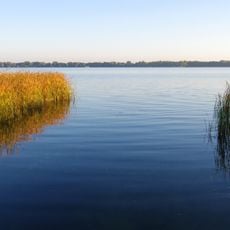
The site sits directly by the lake and is accessible via a path from the town center, though the route is steep. Visitors should wear sturdy shoes and be prepared for uneven ground.
The colored glass windows in the Kurhalle are arranged so that visitors inside can see the reflecting water of the lake from different viewing angles. This deliberate design allows various perspectives of the landscape depending on one's position in the room.
The community of curious travelers
AroundUs brings together thousands of curated places, local tips, and hidden gems, enriched daily by 92,020 contributors worldwide.