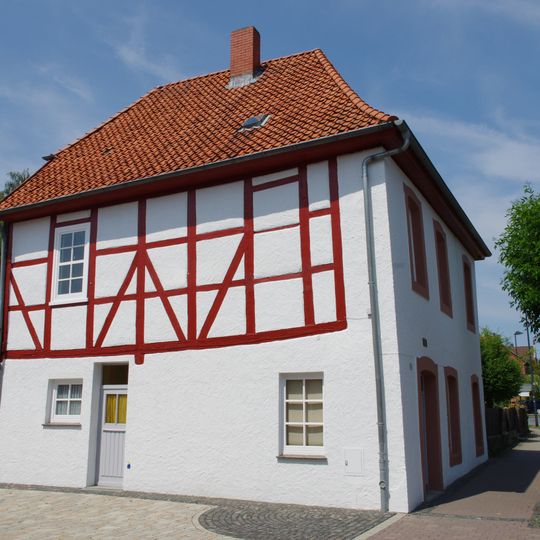
Concentration Camp Moringen, Memorial and architectural heritage site in Moringen, Germany
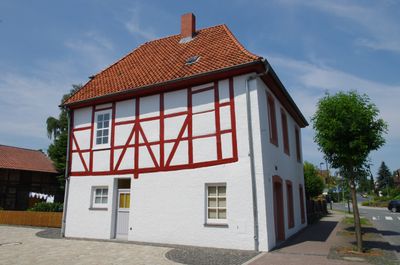
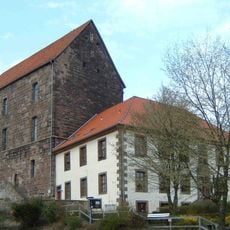
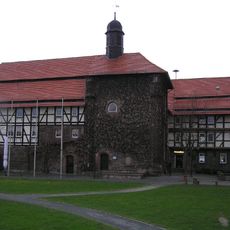
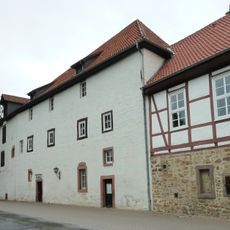
Concentration Camp Moringen was a detention facility built on a former workhouse site and served multiple prisoner populations. The grounds contain preserved buildings, exhibition spaces, and archives holding extensive material documenting three phases of camp operation between 1933 and 1945.
The facility began in 1933 as a camp for male political prisoners and later shifted to a women's camp before ending as a youth detention center. These changes reflect the regime's shifting priorities and show how the site was used for different forms of repression.
The site displays how the buildings and exhibits commemorate the lives of prisoners, ranging from political detainees to children and young people. Visitors can today trace which spaces were used for interrogations, labor, and sleeping.
The site lies in south Lower Saxony and is best explored on foot, with visitors needing time for a complete walk through the outdoor areas and buildings. Archive collections can be viewed by prior arrangement, which is particularly helpful for researchers or those with personal interest.
The facility was also a center for pseudoscientific research where doctors attempted to prove alleged genetic links to criminal behavior. Young inmates were the targets of these experiments, which resulted in forced sterilizations and were particularly cruel.
The community of curious travelers
AroundUs brings together thousands of curated places, local tips, and hidden gems, enriched daily by 60,000 contributors worldwide.