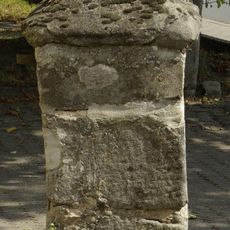
Kosbacher Altar, Archaeological altar in Mönau Forest, Erlangen, Germany
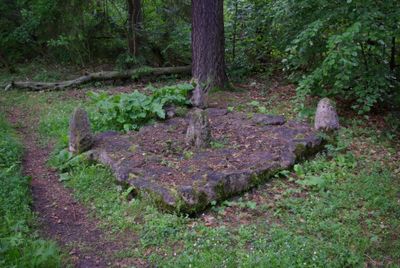
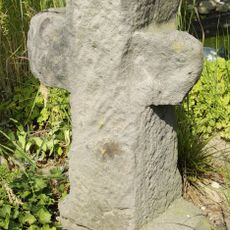
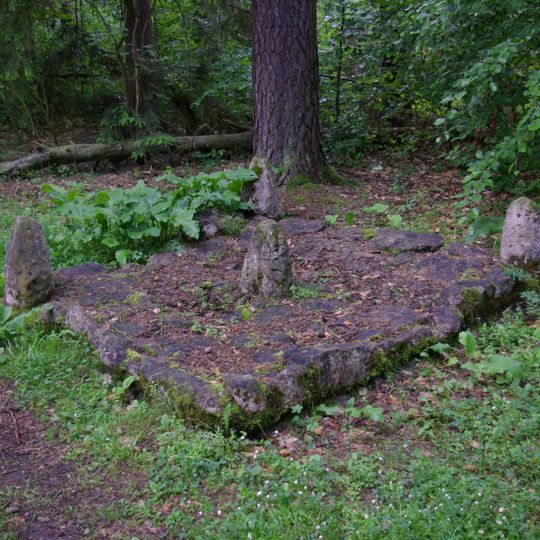
The Kosbacher Altar is a square sandstone formation with a central stone within an extensive burial ground dating from the Iron Age. The structure comprises multiple burial chambers built from stone and wood, covered by an earthen mound and ringed by a stone circle for additional interments.
The altar originates from the late Hallstatt period between 800 and 450 BCE, when such complexes were constructed in the region. Scientific investigation began in 1913 under Pastor Rudolf Herold, who documented the excavations at the site.
The site is named after a nearby spring in the area and visitors today encounter it as a tangible sign of Celtic presence. The layout conveys how this ancient society organized spaces for honoring and remembering the deceased.
What visitors see today is a precise replica made of stone powder and resin, with original artifacts preserved at the Erlangen City Museum. This reconstruction allows immediate understanding of the site while keeping authentic findings protected.
Despite extensive research, the exact purpose of this sandstone formation remains a mystery, with theories ranging from ritual grounds to ash altars. This unresolved question continues to intrigue both scholars and visitors who enjoy pondering possible functions.
The community of curious travelers
AroundUs brings together thousands of curated places, local tips, and hidden gems, enriched daily by 91,415 contributors worldwide.