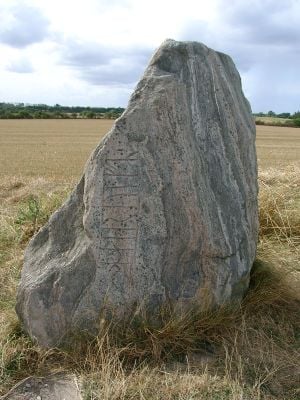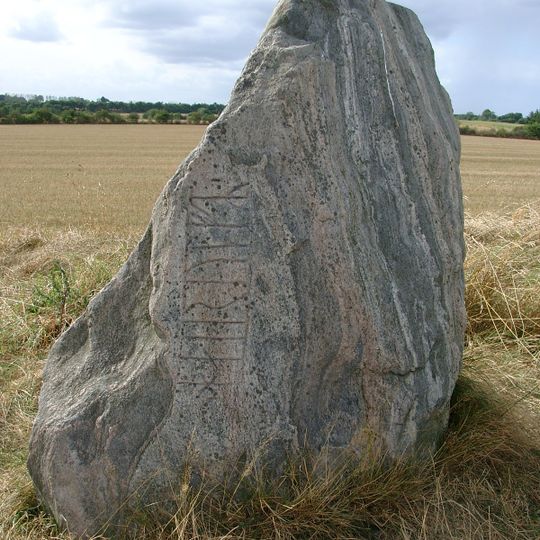
Hærulf Runestone, Norse runestone in Aabenraa Municipality, Denmark.
The Hærulf Runestone is a carved Viking-age monument standing about 124 centimeters high with Proto-Norse runes etched into its surface. The stone features dots as word separators and displays the RAK runic style with straight-ended bands typical of the 10th century.
The stone was originally placed near Øster Løgum in Jutland and taken to Berlin in 1864, where it remained for more than 80 years. It returned to Denmark in 1952 and was relocated close to its starting location.
The name Hærulf comes from Proto-Norse and means Warrior-Wolf, reflecting how Vikings chose names to convey strength and identity. Such stones served as public records where people marked important moments in their lives and families.
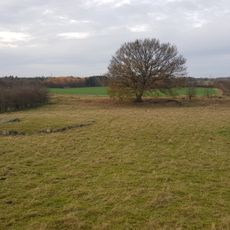
The stone is located in Aabenraa in southern Jutland, not far from Hovslund Stationsby and easily accessible. Since the monument stands outdoors, visitors should consider weather conditions when planning their visit.
The use of dots as word separators on runestones of this period is uncommon and shows advanced writing practices for the time. This careful attention to detail in carving makes it a remarkable example of 10th-century runic craftsmanship.
The community of curious travelers
AroundUs brings together thousands of curated places, local tips, and hidden gems, enriched daily by 91,959 contributors worldwide.