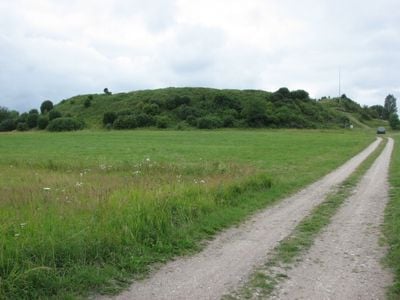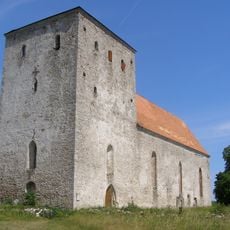
Pöide hill fort, Archaeological hillfort site in Kahutsi, Estonia.
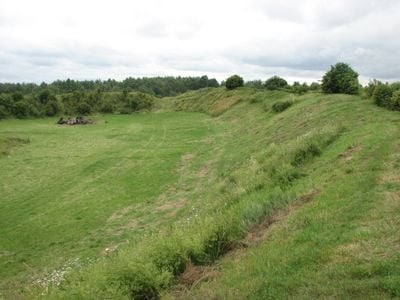
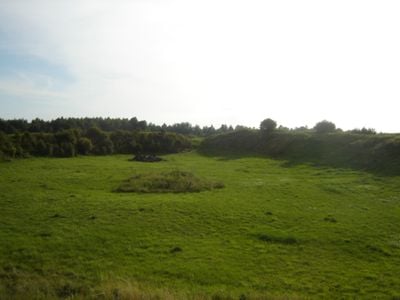
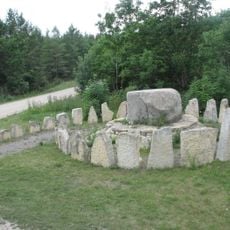
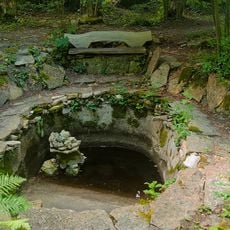
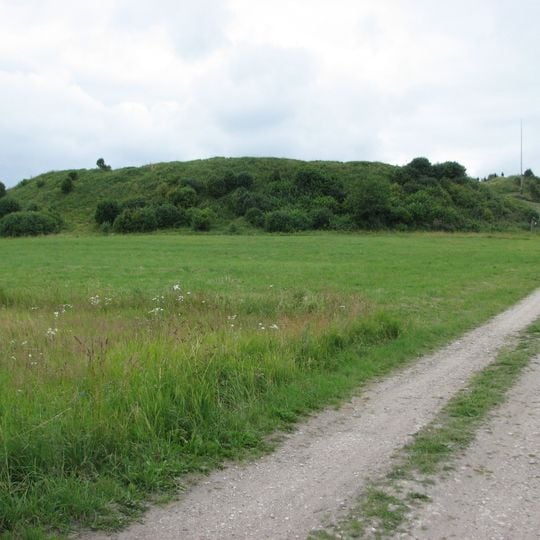
Pöide hill fort is an ancient fortified settlement that measures roughly 85 meters long and 55 meters wide, with exterior walls rising about 10 meters high. Inside, a central depression served as a well, and scattered boulder formations mark where substantial structures once stood.
The fortification was built in the 7th or 8th century as one of the early defensive structures in the region. By the 12th century, it was rebuilt with stronger walls and defenses, showing how military needs and strategies changed over time.
Excavations found layers of dwellings with stoves inside, showing how ancient Estonian communities lived and organized their spaces over time. These remains tell us about the daily life and building practices of people who inhabited this place for generations.
The site is mostly open and walkable, though uneven terrain and walls require sturdy footwear and care when moving around. Allow time to explore the different levels and walk around the perimeter to get a sense of the full layout and walls.
Despite being one of the largest prehistoric fortifications on the island, this place is completely absent from medieval written records. This mysterious silence makes it all the more intriguing to archaeologists seeking to understand the full story of the site.
The community of curious travelers
AroundUs brings together thousands of curated places, local tips, and hidden gems, enriched daily by 60,000 contributors worldwide.