Vézelay Abbey, Romanesque church in Vézelay, France
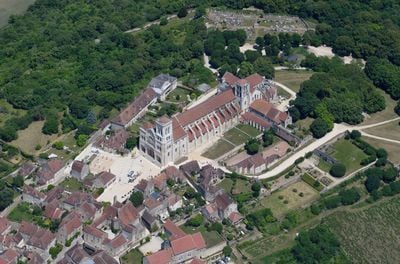
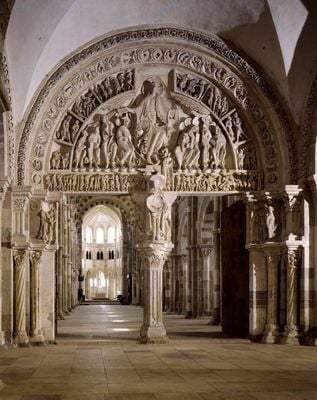
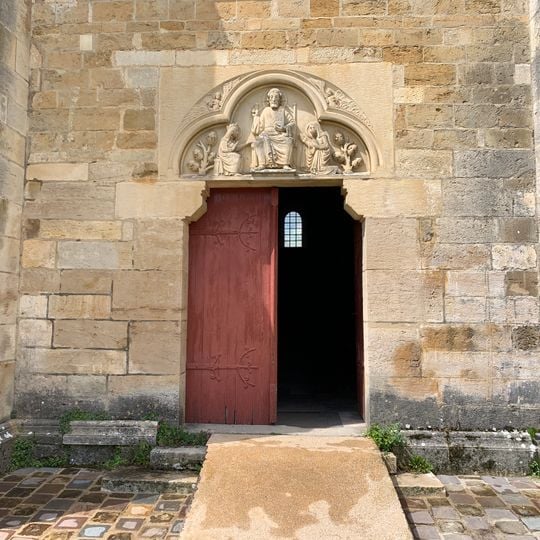
Vézelay Abbey is a 12th-century Benedictine and Cluniac church built between 1120 and 1150. Its central portal carries a carved tympanum of a seated Christ with flanking figures, and the narthex opens into a nave supported by flying buttresses added by Eugène Viollet-le-Duc. The choir, rebuilt at the end of the 12th century, is Gothic and brighter than the dark narthex.
The abbey's rise began around 1050, when the monks claimed to hold the relics of Mary Magdalene, said to have been brought from the Holy Land by Badilo or his envoys. Abbot Geoffroy had chains left by freed captives melted down in 1037 into iron railings around the Magdalene altar. A new church was begun to hold the pilgrims and dedicated on 21 April 1104; Bernard of Clairvaux preached the Second Crusade there in 1146. In 1279 the discovery of the Magdalene's body at Saint-Maximin undermined Vézelay's standing.
The building carries a name tied to a religious figure whose veneration drew thousands of pilgrims in medieval times. Today visitors can see the carved capitals and doorways that reflect both this devotion and how medieval people understood their world.
The nave and narthex are entered from the west steps; the choir, rebuilt in Gothic style at the end of the 12th century, is brighter than the dark narthex. At the summer solstice, the south windows cast a line of bright spots across the nave floor. Liturgical services are held several times a day by the Monastic Fraternities of Jerusalem, present since 1993.
The central portal's tympanum was carved to serve as a spiritual defence of the Crusades, presenting the missionary task of the apostles as an allegory for the Crusaders' mission. Thomas Becket preached in the abbey in 1166, announcing the excommunication of Henry II's main supporters.
The community of curious travelers
AroundUs brings together thousands of curated places, local tips, and hidden gems, enriched daily by 93,341 contributors worldwide.