Louvre-Lens, Art museum in Lens, France
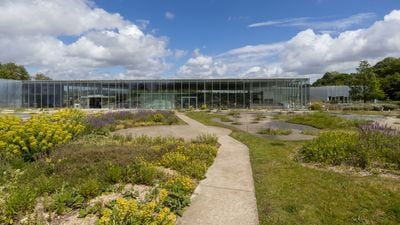
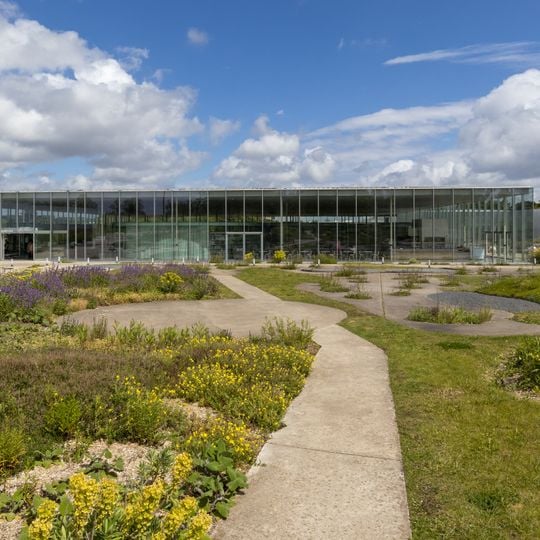
Louvre-Lens is an art museum in Lens, France, built on the former No. 9 mine shaft of the Lens collieries. Its five low buildings, six to seven metres high and 360 m long overall, were designed by the Japanese firm SANAA with Imrey Culbert; four rectangular wings with polished anodised aluminium cladding flank a square glass reception hall. A continuous 3,000 m² Galerie du Temps links them, its concrete floor and inclined slats giving overhead daylight without shadows.
The museum opened in December 2012 on a former mining site and grew from the wish to make the Paris Louvre collections accessible outside the capital. The location symbolizes the transformation of an industrial region into a place for art and education.
The permanent gallery space consists of a continuous room without dividing walls, allowing visitors to see artworks from different periods side by side. This layout makes it possible to compare ancient sculptures, medieval objects, and Renaissance paintings in a single view.
The museum lies about 200 km north of Paris, on the former No. 9 pithead of the Lens mines; a pedestrian path links it to Lens station, and TADAO shuttles run to the station roughly every 40 minutes. The five buildings form a 360 m line, with the square glass reception hall in the middle, the Galerie du Temps to its east and the temporary exhibition gallery to its west. The 20-hectare park, designed by Catherine Mosbach, holds 6,600 trees and former railway lines turned into access paths.
The artworks come from the Paris Louvre holdings and change at regular intervals, allowing returning visitors to discover new pieces each time. This rotation makes it possible to display objects that often remain in Paris storage and are rarely shown publicly.
The community of curious travelers
AroundUs brings together thousands of curated places, local tips, and hidden gems, enriched daily by 94,751 contributors worldwide.