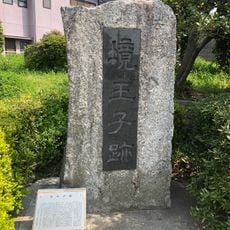
Hochigai Shrine, Shinto shrine in Osaka Prefecture, Japan
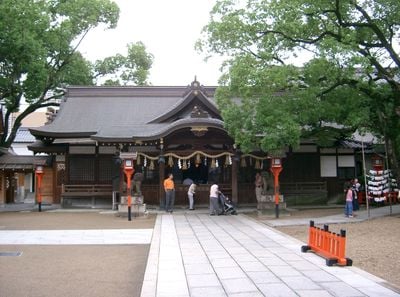
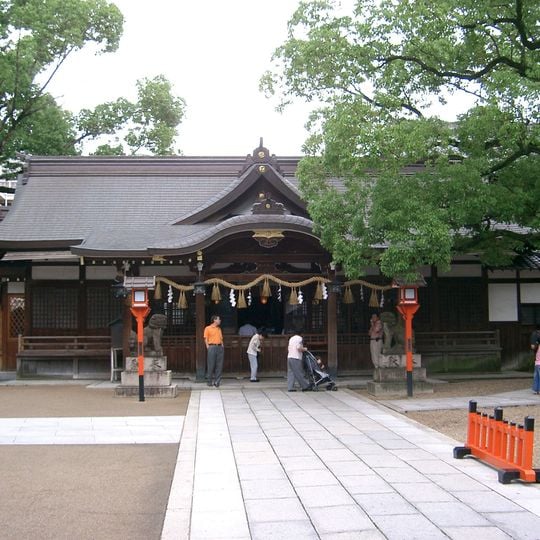
Hochigai-jinja is a Shinto shrine in Sakai-ku, Sakai, whose worship hall was rebuilt in December 2017. A broad dark-grey tiled roof with gently curved eaves rises over a pillared porch, across which hangs a sacred rope with white zigzag paper streamers. Latticed wooden panels flank the dark doorway, two stone animal statues stand near the steps, and two orange lantern posts frame the approach.
According to shrine tradition, it was founded in 90 BCE when Mononobe no Ōmoro Sumi no Sukune was sent by Emperor Sujin to enshrine Susanoo at Ishizu-hara in Chinu. It stood on the border of Settsu, Kawachi and Izumi provinces, a site without cardinal direction, and was revered for averting directional misfortune. The shrine buildings burned in the Sakai air raid of 10 July 1945 and were rebuilt in 1948, then replaced in December 2017.
Locals call the shrine "Hochigai-san". Its crest is the chimaki, a rice dumpling wrapped in reed leaves: worshippers once offered chimaki packed with clay from the grounds to ward off unlucky directions, and on 31 May the Chimaki Festival offers them at 13:00. At Setsubun in February, stalls sell sweets (ame) recalling the clay sweets offered by Empress Jingu.
The shrine is a five-minute walk east from Nankai Koya Line Sakaihigashi Station, ten minutes west from JR Hanwa Line Sakai-shi Station, and immediately by the Hochigai-jinja-mae bus stop. Visitors receive purified sand to scatter around the four sides of their home; the shrine sells it together with charms and chimaki rice cakes.
The shrine's crest is the chimaki rice dumpling, from the story of Empress Jingu wrapping local clay in reed leaves to ward off inauspicious directions. At the May 31例祭, chimaki are offered; the shrine's clay, sold as purifying sand, is scattered around worshippers' homes.
The community of curious travelers
AroundUs brings together thousands of curated places, local tips, and hidden gems, enriched daily by 93,659 contributors worldwide.