Hattori Sumiyoshi Shrine, Shinto shrine in Osaka Prefecture, Japan
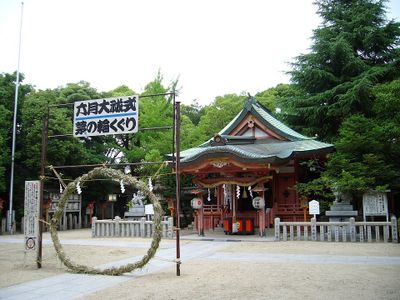
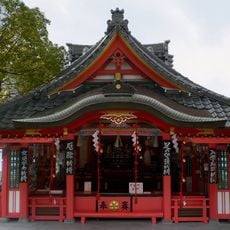
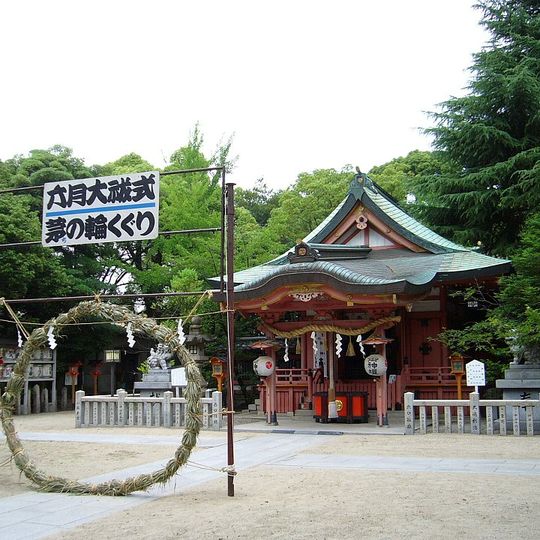
Hattori Sumiyoshi Shrine is a wooden Shinto shrine raised on a red-painted base, with a green copper roof and a curved gabled entrance porch. The facade has red pillars and beams, a hanging bell rope and white paper streamers, and a smaller red and white offertory box stands before the main hall. To the left, a large white sign reads "六月大祓式" and "茅の輪くぐり", and a woven straw ring hangs on a frame in the foreground.
The shrine's founding date is unknown, but its records note that the main hall and torii were rebuilt in 1152, so it predates that year. It burned in 1578 during Oda Nobunaga's campaign against Araki Murashige and was rebuilt in 1622. A fire destroyed it again in 1947; the present main hall, worship hall and offering hall were moved here from Toyokuni Shrine in 1961.
The shrine is dedicated to the three Sumiyoshi gods and Empress Jingū, reflecting its importance to local believers. Visitors can observe people leaving coin offerings, writing wishes on paper tags, and bowing in prayer to seek blessings for health and well-being.
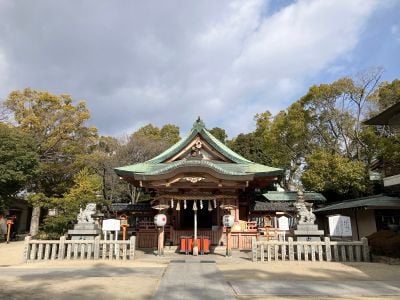
The shrine is about a five-minute walk from Hattori Tenjin Station on the Hankyu Takarazuka Line, and about three minutes from the Hattori Ekimae intersection on National Route 176. The address is 2-3-31 Hattori Minamimachi, Toyonaka, Osaka. The main hall, worship hall and bell hall stand together, with the Noh stage registered as a national tangible cultural property.
The shrine's noh stage, built in 1898, is the oldest in Osaka Prefecture and was registered as a national tangible cultural property in 1998. It first stood at the Osaka Museum, was moved to Osaka Tenmangu in 1927, and came here in 1977; its mirror room was separated and moved to Hattori Tenmangu. Noh and kyogen are performed several times a year, including a takigi noh in August.
The community of curious travelers
AroundUs brings together thousands of curated places, local tips, and hidden gems, enriched daily by 94,094 contributors worldwide.