Honshō-ji Temple, Buddhist temple in Nodera-cho, Anjo, Japan
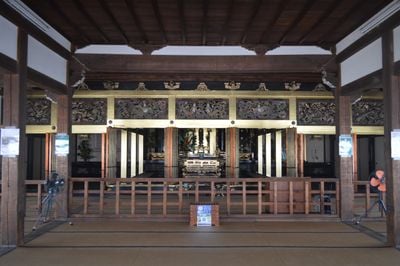
Honshō-ji is a Jōdo Shinshū temple in Nodera-chō, Anjō, with a main hall from 1663, a bell tower from 1703, a drum tower from 1760, and gates from around 1700. Its flatland layout keeps about half of the inner moat and earthen walls. Inside, the main hall has a coffered wooden ceiling and a frieze of gold panels carved with figures and birds.
The temple was founded in 1206 by Kyoen, a disciple of Shinran, and developed into an important religious center. It became a key force in the Mikawa Ikko Ikki uprising against Tokugawa Ieyasu during the warring states period.
The temple keeps two Kamakura-period paintings, of Prince Shōtoku and of the Zenkō-ji honzon statues; both are registered as Important Cultural Properties of Japan, not National Treasures. The temple is also called Nodera Gohon-bō, and its precinct was designated a national Historic Site in 2015. Since 2017 residents have held the Honshō-ji Festival, with sutra chanting over participants lying in coffins, gagaku, taiko and lectures.
The temple stands southeast of central Anjō in Nodera-chō. The outer moat has been buried under modern development, but about half of the inner moat survives, so the water edge and earthen walls can still be traced on foot. The main hall, bell tower, drum tower, sutra library and gates are Edo-period buildings protected as Aichi Prefectural Important Cultural Properties.
The temple's precinct is about 33,000 m². The outer moat was buried under modern urban development, and roughly half of the inner moat survives. The grounds are also referred to as Honshō-ji Castle in castle-studies literature, and the temple name is officially written 本證寺.
The community of curious travelers
AroundUs brings together thousands of curated places, local tips, and hidden gems, enriched daily by 94,934 contributors worldwide.