Mizuma-dera Temple, Buddhist temple in Kaizuka, Japan
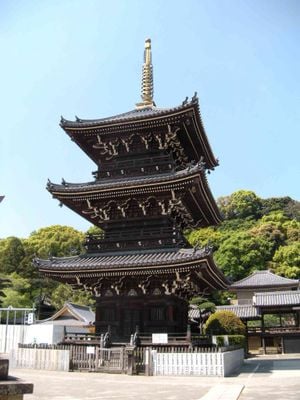
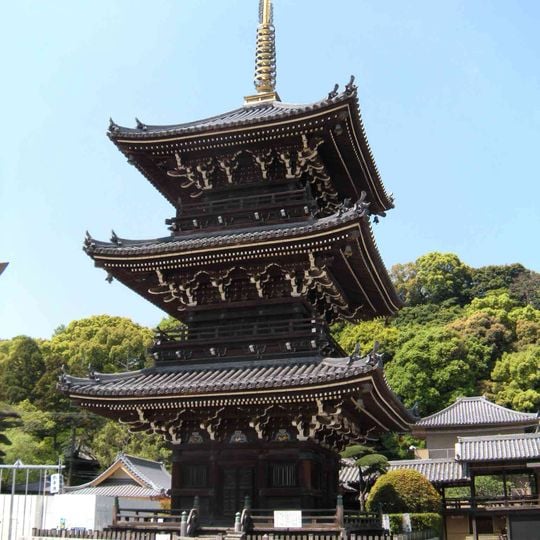
Mizuma-dera is a Tendai Buddhist temple in Kaizuka, Osaka Prefecture, known as Mizuma Kannon. Its three-tiered wooden pagoda, rebuilt in 1834 by Okabe Nagachika, is the only one in Osaka Prefecture built before the Meiji era. The dark timber structure has white plaster details under each eaves line and a golden finial with stacked rings. The main hall, rebuilt in 1827, stands behind the pagoda.
The temple was founded in 744 by the Buddhist priest Gyoki and suffered destruction during military conflicts in 1585. It was later restored during the Genroku period, eventually becoming the structure visitors see today.
The temple's name is also used for the Mizuma Kannon pilgrimage site, the fourth stop on the New Saigoku Thirty-three Kannon route. The Mizuma Senbon-tsuki Mochi Pounding, a city-designated intangible folk cultural property, is maintained by the Mizuma Senbon-tsuki Mochi Pounding Wakarenju preservation society. Sixteen ceramic Yakuyoke Jūroku Dōji and wakidōshi figures, made by the Tsuchinoko Tōbō workshop, line the Yakuyoke Kaidō approach from Kiyosu Station to the temple grounds.
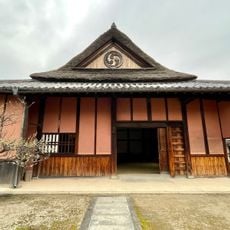
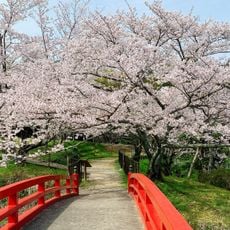
The temple grounds have no walls or gates, so you can enter freely. From Mizuma-Kannon Station on the Mizuma Railway it is about a 7-minute walk; the approach crosses the Yakuyoke Bridge over the Kogi River. The main hall stands behind the three-story pagoda, with the bell tower and sutra repository to the right above the Kibitani River.
The honzon, a 6 cm statue of Shō Kannon in a dark wooden case, has never been shown to the public. Temple tradition says Gyōki received it from a dragon god at a waterfall behind the main hall; a board by the Kibitani River marks the spot.
The community of curious travelers
AroundUs brings together thousands of curated places, local tips, and hidden gems, enriched daily by 93,433 contributors worldwide.