Hōnen-ji Temple, Buddhist temple in Takamatsu, Japan.
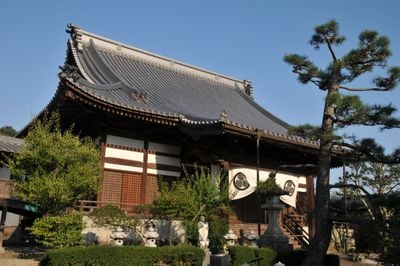
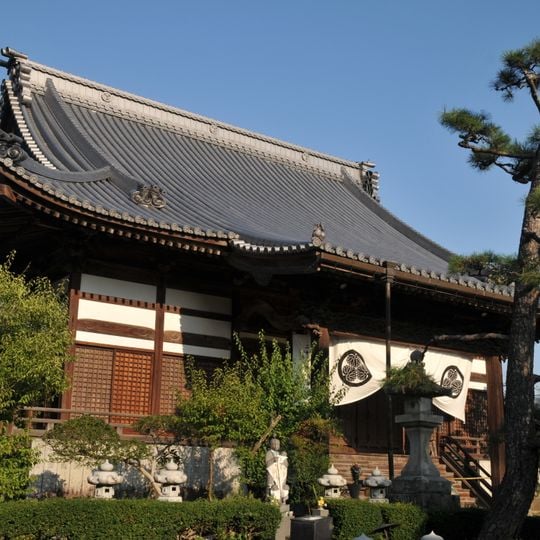
Hōnen-ji is a Jōdo-shū temple at the foot of the Busshōzan hill in Takamatsu, formally called Busshōzan Raigō-in Hōnen-ji. Its main hall, rebuilt in 1907, has a wide grey tiled hip-and-gable roof with upturned corners; below the eaves, white plaster panels alternate with dark brown timber and lattice slats, and one bay hangs a round white curtain bearing a dark crest. Stone lanterns stand at ground level before the wooden facade.
The temple began in 1207, when Hōnen, founder of the Jōdo sect, stopped at Komatsu-no-shō in Naka district (now Mannō) and Shōfuku-ji was built there. In 1668 Matsudaira Yorishige, first lord of Takamatsu and elder brother of Tokugawa Mitsukuni, renamed it Hōnen-ji and moved it to its present site over three years. He levelled the hill behind it for the Hannya-dai, the Matsudaira burial ground, making the temple the clan's family temple.
The temple's name comes from Hōnen, the founder of the Jōdo-shū school, who was exiled to Sanuki in 1207 and stopped at a temple in Komatsu. The main image is a standing Amida Buddha said to have been made by Hōnen himself. The temple is the second stop on the twenty-five sacred sites of Hōnen and holds a Daikokuten of the Sanuki Seven Lucky Gods.
The Shoin, Main Hall and Three Buddha Hall interiors are open to visitors from 8:30 to 17:00. The temple stands in the Busshōzan area of Takamatsu, and the Matsudaira family graves on the hill behind it, called Hannya-dai, are reached by a climb. The Nizō-dō hall burned down on 13 January 2014.
The grounds feature a path called Niga Byakudo that guides visitors on a symbolic journey toward the Raigodo Hall. This path represents a religious concept and adds deeper meaning to walking through the site.
The community of curious travelers
AroundUs brings together thousands of curated places, local tips, and hidden gems, enriched daily by 93,579 contributors worldwide.