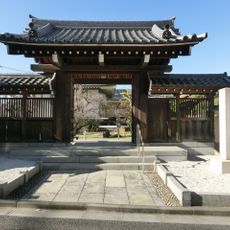
Hakusan Shrine, Shinto shrine in Hakusan, Bunkyo, Tokyo, Japan
Hakusan Shrine is a Shinto shrine in Hakusan, Bunkyo, Tokyo, founded in 948 and moved to its present site in 1655. Its main hall is built in the nagare-zukuri style, with a roof that slopes forward over the entrance. The grounds cover about 6,882 square meters and include several auxiliary shrines, a Fuji mound, and around 3,000 hydrangea plants.
Founded in 948 after a kami transfer from Shirayama Hime Shrine in Kaga Province, it first stood in Hongō, then moved to Sugamo Plain in 1616 by order of Tokugawa Hidetada. In 1655 the site was taken for Tokugawa Tsunayoshi's residence, so the shrine was relocated to its present grounds. It was later destroyed by fires in 1703 and 1718 and rebuilt.
The shrine's name gave the district of Hakusan its name. Its deities are Kikuri-hime, Izanagi and Izanami. In June the Bunkyo Hydrangea Festival fills the grounds and neighbouring Hakusan Park with about 3,000 hydrangea plants; the Fuji-zuka mound is opened to visitors and toothbrush memorial services and fair stalls are held, mainly at weekends.
The shrine stands a two-minute walk from exit A3 of Hakusan Station on the Toei Mita Line. In mid-June the grounds and the adjoining Hakusan Park hold the Bunkyo Hydrangea Festival, when about 3,000 hydrangea plants are in bloom and the Fujizuka mound is opened to visitors.
The nagare-zukuri style is defined by a roof that is longer on the front side than on the back, giving the building a slight forward lean that is easy to notice when you approach it. Most visitors walk past without realizing that this asymmetry is actually the defining feature of the whole architectural style.
The community of curious travelers
AroundUs brings together thousands of curated places, local tips, and hidden gems, enriched daily by 93,552 contributors worldwide.