Hyakusai-ji Temple, Buddhist temple in Higashiōmi, Japan
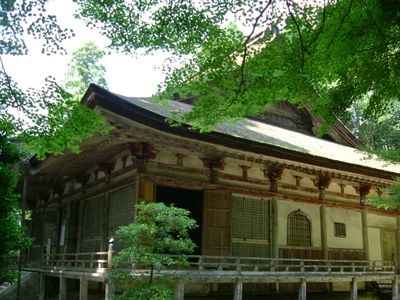
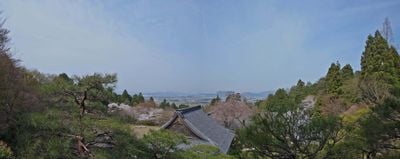
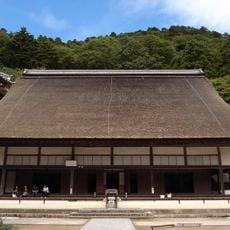
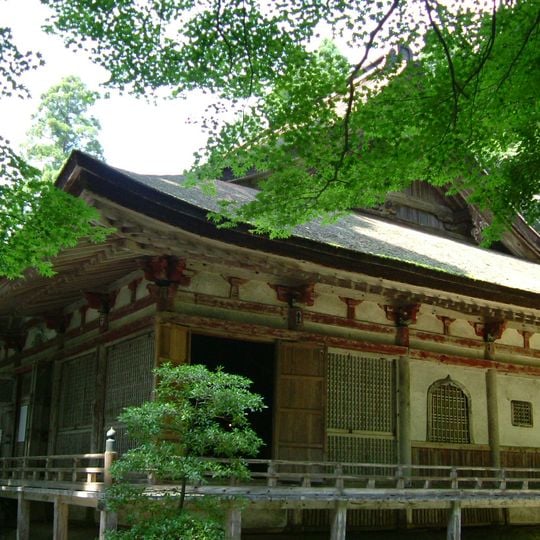
Hyakusai-ji is a Buddhist temple on the western slopes of the Suzuka Mountains in Higashiōmi. The main hall has a roof made of cypress bark and is surrounded by gardens with water basins and rock clusters.
The temple was founded in 606 by Prince Shōtoku and experienced several fires, including complete destruction by Oda Nobunaga in 1573. Reconstruction took place in 1650 and brought about the current buildings.
The temple is named after Baekje, the Korean kingdom whose Ryuun-ji served as its model, not after pines. Worshippers have long hung straw sandals and straw cow boots at the Niō Gate to pray for strong legs for mountain work; the giant waraji there grew to about 3 m and is renewed roughly every ten years by the people of Hyakusaiji Honmachi.
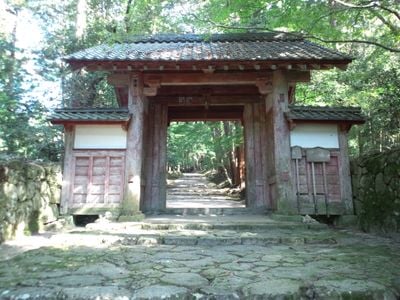
The approach is a climb: from the Hyakusaiji-honmachi bus stop it is about 1.2 km on foot uphill, and the precinct itself rises in stone steps from the Red Gate past the Kigen-in to the Niō Gate and the main hall. Buses from Notogawa Station take roughly 35 minutes and run about hourly; the city's Chokotto Bus from Yōkaichi Station has only three services a day.
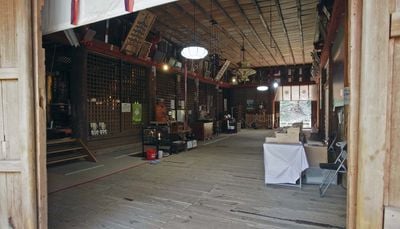
The hibutsu eleven-faced Kannon in the main hall is a single-block carving 2.49 metres tall, dated to the Nara period and considered Shiga Prefecture's oldest wooden Buddha. Temple tradition holds it was carved from a living cedar, and it was carried about eight kilometres to the Oku-no-in Fudō-dō for safekeeping during Nobunaga's 1573 burning of the temple.
The community of curious travelers
AroundUs brings together thousands of curated places, local tips, and hidden gems, enriched daily by 93,605 contributors worldwide.