Chikuma Shrine, Shinto shrine in Shiga Prefecture, Japan
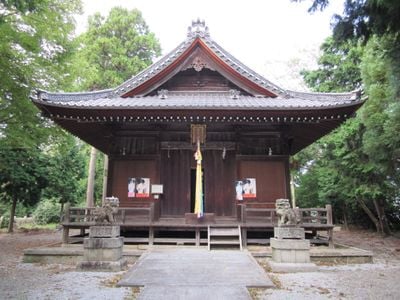
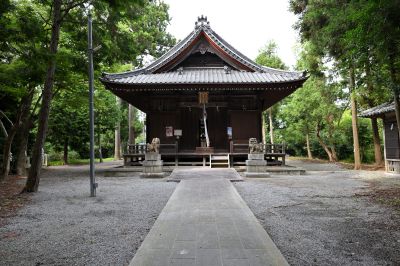
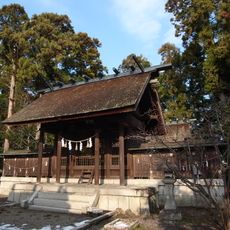
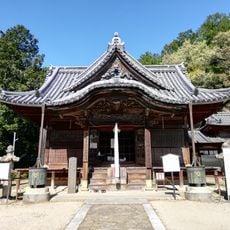
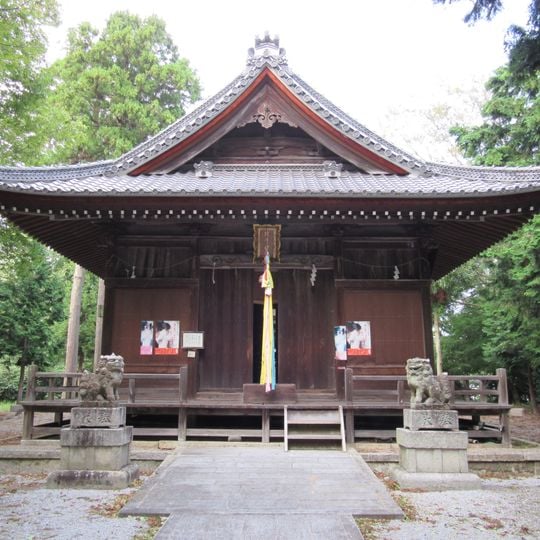
Chikuma Shrine is a Shinto shrine in Maibara, Shiga Prefecture, built in the nagare-zukuri style. Its wooden hall, raised on a stone base, has a broad gray-tiled gabled roof with a triangular gable ornament and white-edged rafters. A recessed doorway flanked by dark wooden panels with posters is hung with a striped yellow and blue cloth, and two stone guardian lions inscribed 大宮 and 藤春 stand at the foot of short steps.
According to shrine tradition, it was founded in 365 BC, during the reign of Emperor Kōan, and rebuilt when Emperor Keitai passed by on his way from Echizen to the capital. In 852 it received the junior fifth rank, and in 1245 the senior first rank; the Hikone Ii clan patronized it in the Edo period. It became a prefectural shrine in 1915.
The shrine's name comes from Chikuma, and its deities are all connected with food. On 3 May, about 200 people walk the roughly 1 km from the otabisho to the shrine; eight girls of about eight years old, in hunting robes, wear pots on their heads. This is the Nabekaburi Matsuri, a municipal intangible folk cultural property.
The shrine is about 30 minutes on foot from Maibara Station, or a short drive from the Maibara highway interchange. The area is quiet and well-signposted, making it easy for visitors to find their way.
The pot-wearing role was once held by adult women, not girls: an unwritten rule held that a woman wore as many pots as men she had known, a custom noted in the Heian-era Ise Monogatari (section 120). In the mid-Edo period a woman who wore too few pots was punished, lost her pots and drowned herself in the shrine pond; the Ii lords of Hikone then banned the practice, later allowing only children of about seven or eight.
The community of curious travelers
AroundUs brings together thousands of curated places, local tips, and hidden gems, enriched daily by 94,895 contributors worldwide.