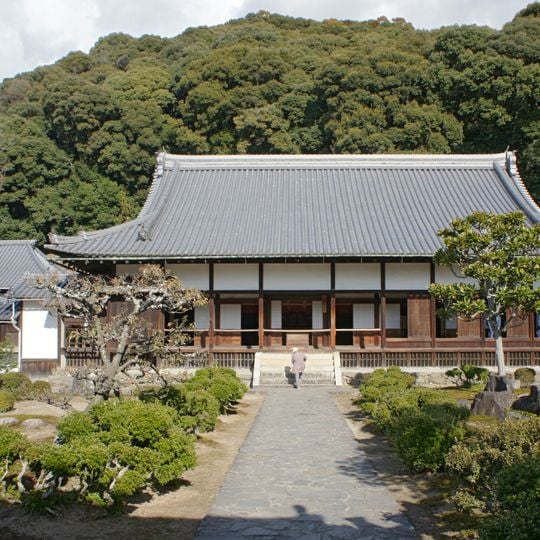
Kōshō-ji Temple, Buddhist temple in Uji, Japan
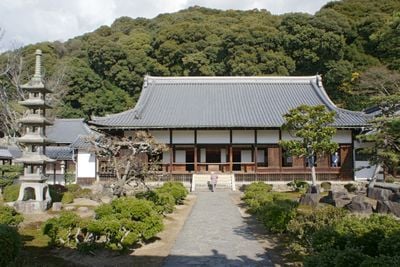
Kōshō-ji is a Sōtō Zen temple in Uji, Kyoto Prefecture, founded by Eihei Dōgen. Its main hall (hattō) is a single-storey building with a broad grey tiled roof, white plaster panels between dark posts, and a wooden veranda on a stone base reached by a central stone stairway. The temple is approached by the 200-metre Kotosaka path, and its precinct is a Kyoto Prefecture cultural property environmental preservation area.
Dōgen founded the temple at Fukakusa, south of Kyoto, in 1233, naming it Kannon-dōri-in Kōshō-hōrin-ji; the opening ceremony followed in 1236. Persecuted by Enryaku-ji and abandoned after Dōgen left for Echizen in 1243, it fell into ruin. In 1648 the Yodo domain lord Nagai Naomasa invited Man'an Eishu to revive it on its present site, a former tea plantation, using structures from the dismantled Fushimi Castle.
Ceiling panels saved from an earlier castle decorate the main pavilion and display paintings from past centuries. Monks gather in the meditation halls each day to practice seated forms of Zen taught within the Soto tradition.
The grounds open early in the morning and close in the late afternoon, with adults paying an entrance fee. Students and pupils may visit without charge.
The temple's Shō Kannon standing statue, a Uji City cultural property, is known as Tenarai Kannon. It was worshipped at the "Tenarai no Mori" site linked to the Tenarai chapter of The Tale of Genji's Uji Ten Chapters. The temple also keeps the capstone and finial from the ninth tier of the Ukishima Thirteen-Story Stone Pagoda, rebuilt in 1908.
The community of curious travelers
AroundUs brings together thousands of curated places, local tips, and hidden gems, enriched daily by 93,443 contributors worldwide.