Bodai-ji Temple, Buddhist temple in Mutsu, Japan.
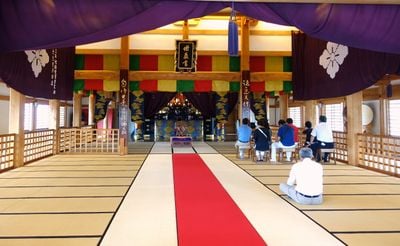
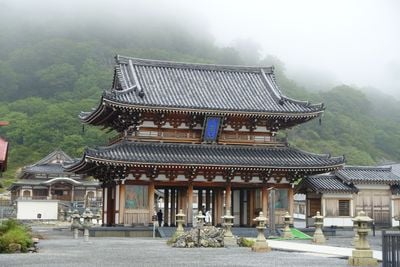
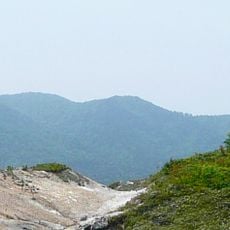
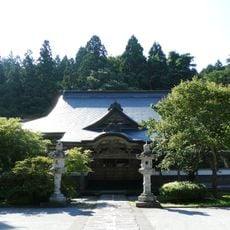
Bodai-ji stands on Mount Osore in Mutsu, Aomori Prefecture, behind a field of pale jagged rock. Its central hall has a dark, steeply pitched roof with a raised ridge and wide eaves above a dark wooden facade with vertical posts; to the left a long low building has a pale grey roof and white walls with dark beams. Inside, a tatami hall holds a red carpet bordered by white mats, an altar behind a low railing, and striped curtains between wooden pillars.
Monk Ennin founded the temple in 862 following his return from China, where he had studied Buddhist practices. This establishment marked the beginning of a long Buddhist presence in this northern region.
Bodai-ji is known for the itako, blind female mediums who during the summer Grand Festival (20–24 July) and the autumn pilgrimage perform kuchiyose, calling the dead to speak with the living. The main image, Enmei Jizō Bosatsu, is venerated as a Buddha who saves people from suffering. The Sanzu River and a red bridge in the grounds mark, by local belief, the border between the physical and spiritual worlds.
The temple is open to visitors from May 1 to October 31; outside that season the grounds are closed. From JR Shimokita Station on the Ominato Line, take a Shimokita Kotsu bus (about 45 minutes) or a taxi (about 25 minutes). The grounds hold four hot-spring baths used as communal baths, and steam vents and springs rise near Usoriyama Lake.
The Sanzu River flows into Lake Usori within the temple grounds, and a red bridge crosses it; local belief holds that this stream carries the spirits of the dead and that the bridge marks the boundary between the physical and spiritual worlds. The lake shore also has vents releasing sulfurous steam.
The community of curious travelers
AroundUs brings together thousands of curated places, local tips, and hidden gems, enriched daily by 94,653 contributors worldwide.