Namura Shrine, Shinto shrine in Ryūō, Japan
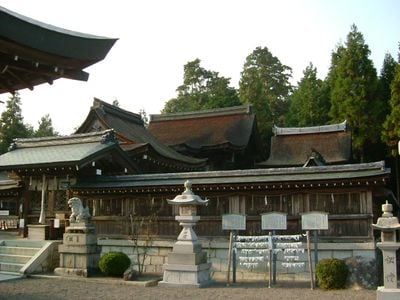
Namura Jinja is a Shinto shrine complex in Ryūō, Shiga Prefecture, with two main sanctuaries, the Nishi-Honden and Higashi-Honden, set behind a low fence hung with white paper streamers and wooden plaques. The Nishi-Honden, rebuilt in 1308, is a three-bay nagare-zukuri building with a cypress-bark roof; a stone fox statue and a tall stone lantern stand on the gravel forecourt.
The shrine's origin is uncertain; its own legend traces it to the reign of the semi-legendary Emperor Suinin. It first appears in the Engishiki listing of 927. In 969 the kami Kunisatsuchi-no-mikoto was moved from Mount Kinpu in Yamato into a new Nishi-Honden, while the original building became the Higashi-Honden. The Nishi-Honden standing today was rebuilt in 1308.
The shrine's name dates from 1017, when Emperor Go-Ichijō granted it after pine saplings were presented for the palace's New Year kadomatsu. Its main festival, the Namura Matsuri, is held every 20 April, when ten sacred horses and three portable shrines process from nine miyaza groups. The 33-yearly grand festival, held in 2014 for the 14th time, draws parishioners from 33 villages.
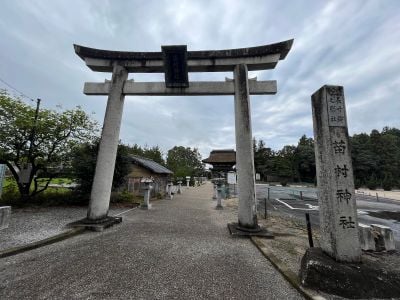
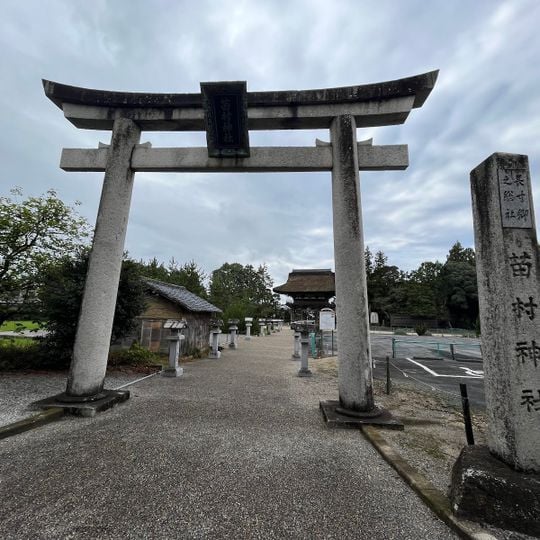
The shrine stands at Ayao 467 in Ryūō, Shiga Prefecture, about a 10-minute drive from the Meishin Ryūō interchange; parking fits 20 cars and 5 large vehicles. By train, take a bus from Ōmi-Hachiman Station on the JR Biwako Line and get off at Kawamori, roughly 20 minutes. The gravel forecourt gives level access to the main buildings.
The 33 villages are not branch shrines but the shrine's parishioner villages (ujiko), which once gathered every year on 5 September for a joint festival; since 1599 this gathering has been held only once every 33 years, most recently in 2014, the 14th occurrence.
The community of curious travelers
AroundUs brings together thousands of curated places, local tips, and hidden gems, enriched daily by 94,113 contributors worldwide.