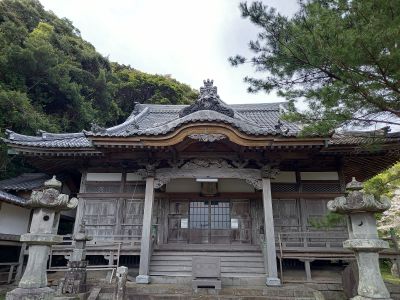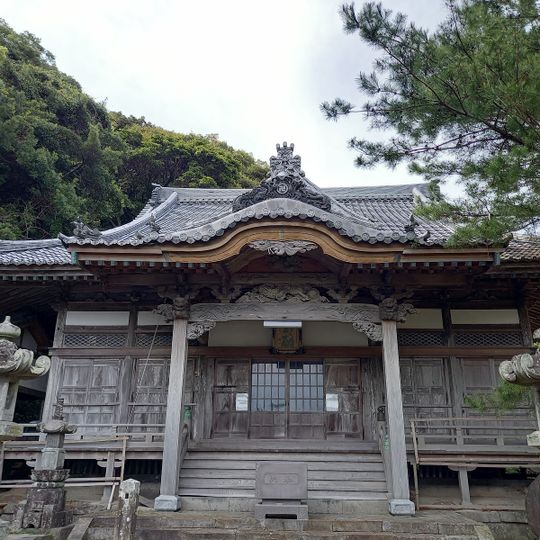
観音寺, Buddhist temple in Wakimisaki-machi, Nagasaki, Japan
Kannon-ji is a Sōtō Zen Buddhist temple in Wakimisaki-machi, at the southern tip of the Nagasaki Peninsula. Its mountain name is Entsū-zan, and it is formally called Entsū-zan Kannon Zenji. The Kannon hall standing today was rebuilt in the Edo period and houses a wooden standing Thousand-Armed Kannon about 2.5 m tall, dated to the late Heian period.
According to temple tradition, the temple was founded in 709 by the monk Gyōki. The current Kannon Hall was rebuilt in the Edo period and houses a roughly 2.5 m wooden Thousand-Armed Kannon statue from the late Heian period, known as the "Misaki Kannon". Because Wakimisaki served as a waiting port for Chinese ships entering and leaving Nagasaki, donors to the temple included not only Nagasaki townspeople and courtesans but also Chinese trade merchants.
The temple is known as "Misaki no Kannon", and its hall holds a standing Thousand-Armed Kannon about 2.5 m tall, dated to the late Heian period. Wakimisaki served as a waiting harbour for Chinese ships entering and leaving Nagasaki, so donors listed in temple records include Nagasaki townspeople and courtesans as well as Chinese trade merchants.
Kannon-ji stands at 2330 Wakimisaki-machi at the southern tip of the Nagasaki Peninsula. From the "Kannon-ji Iriguchi" bus stop on a Nagasaki Bus route, the temple is a three-minute walk; by car from central Nagasaki it takes about an hour via National Route 499. Wakimisaki Beach and Kabashima island lie nearby.
The temple's name is also read Kannon-ji, and its mountain name is Entsu-zan; it is formally called Entsu-zan Kannon Zen-ji. The temple bell is a city-designated tangible cultural property, and the ceiling paintings inside the Kannon hall, by Ishizaki Yushi and Kawahara Keiga, are a prefectural cultural property.
The community of curious travelers
AroundUs brings together thousands of curated places, local tips, and hidden gems, enriched daily by 94,369 contributors worldwide.