Yakuō-ji Temple, Buddhist temple in Minami, Japan.
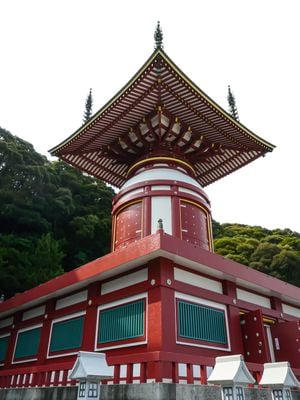
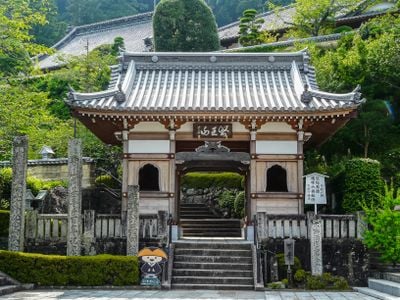
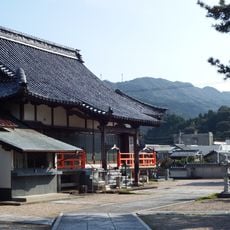
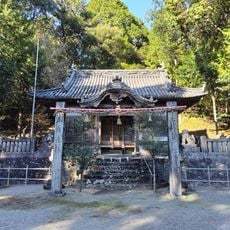
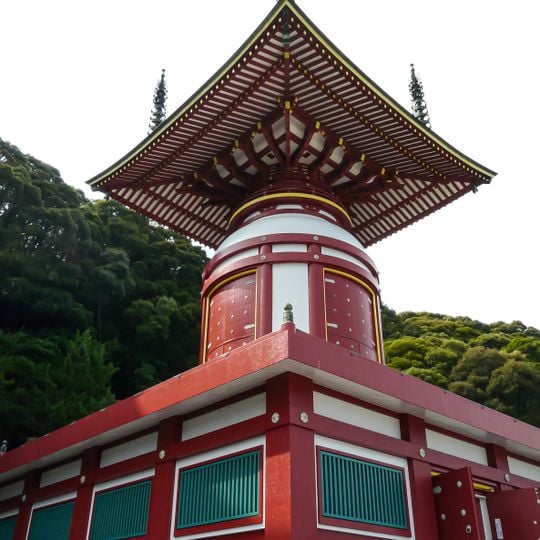
Yakuō-ji is a Kōyasan Shingon temple whose main hall, rebuilt in 1908, has a red-walled base with white horizontal bands and green slatted windows in white frames. Above it rises a cylindrical red and white tower section under a wide tiered roof with red rafters and upturned eaves, crowned by a small finial, with two slender spires at the roof edges. A wooden gate with a grey tiled roof and a dark plaque bearing gold characters stands at the top of stone steps.
The temple was founded in the early 8th century under Emperor Shomu's direction and experienced a major fire in 1188. Emperor Go-Daigo subsequently oversaw its reconstruction, reshaping the complex.
As temple 23 of the Shikoku 88-temple pilgrimage, Yakuō-ji is known for yakuyoke (protection from misfortune). Pilgrims strike the bell of misfortune-removal once for each year of their age while reciting a mantra, and climb the 42-step men's slope or 33-step women's slope. The temple's goeika hymn asks the temple to give lapis lazuli medicine to all the sick.
The temple is about 400 metres from JR Hiwasa Station on the Mugi Line, and the site has free parking for 350 cars and 10 large vehicles. The approach from National Route 55 is 100 metres. The henro trail from temple 22 via Ono, Hoshigoe-chaya and Kumō covers 18.1 km.
The temple houses two Medicine Buddha statues, with one facing backward in its shrine. This unusual orientation earned it the nickname 'Backward-facing Yakushi' among visiting pilgrims.
The community of curious travelers
AroundUs brings together thousands of curated places, local tips, and hidden gems, enriched daily by 93,544 contributors worldwide.