Saidai-ji Temple, Buddhist temple in Higashi-ku, Japan
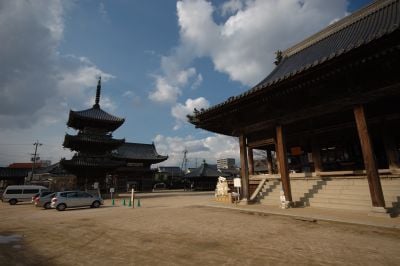
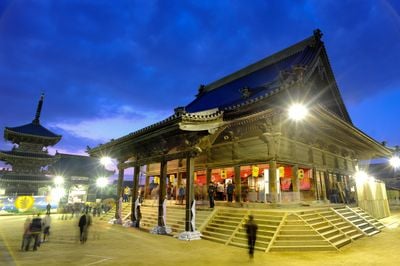
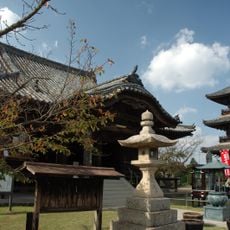
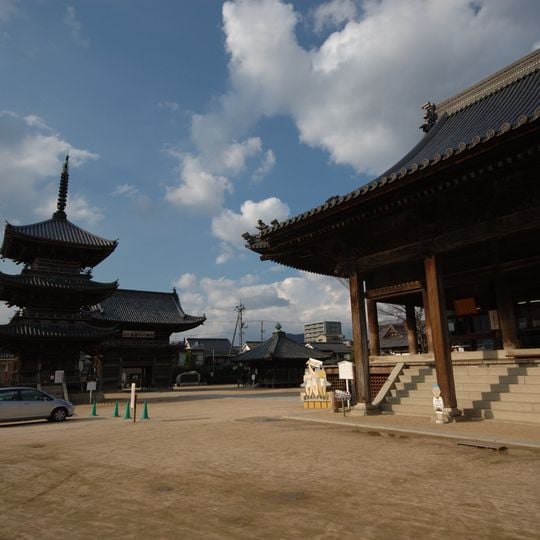
Saidai-ji is a Shingon temple whose grounds hold a main hall rebuilt in 1863, a three-story pagoda rebuilt in 1675, and a niō gate from 1740. The main hall has a dark tiled roof with curved corners, thick timber pillars, and a row of paper lanterns along its open facade. A small white statue and a sign stand near its base.
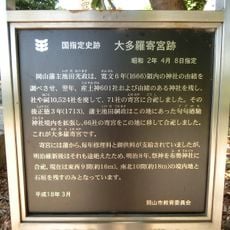
According to temple tradition, the origin dates to 751, when Fujiwara no Minamitaru-hime enshrined a Kannon statue at Kanaoka. In 777 the monk Anryū built the hall on the present site, first called Saidaiji after a rhinoceros horn buried to pacify the ground; it was later renamed Saidai-ji. A 1299 fire record lists a main hall, a three-story pagoda and a Niō gate, showing it was already a major temple.
The name Saidai-ji derives from an earlier name, Sai-dai-ji, meaning 'rhinoceros-horned temple', after the site where a rhinoceros horn was buried to pacify the ground. Today the temple is the first stop on the Chūgoku 33 Kannon pilgrimage. Its famous Eyo festival, held on the third Saturday of February, involves men in loincloths competing for sacred sticks; women drummers open the event and perform cold-water purification.
Saidai-ji is a 10-minute walk from JR Saidaiji Station on the Ako Line, and the same from the Ryobi bus terminal. On the day of the Eyo festival, JR runs extra trains and direct buses leave from Okayama city bus terminals. The temple grounds lie near the mouth of the Yoshii River.
The shingi sticks are not thrown by monks but dropped at midnight from the hall's Ofuku window, wrapped in goo paper, after two weeks of prayers. Women do not take part in the scramble, yet all the drummers who open the festival are women, and they purify themselves in cold water at the Kori-toriba that evening.
The community of curious travelers
AroundUs brings together thousands of curated places, local tips, and hidden gems, enriched daily by 93,460 contributors worldwide.