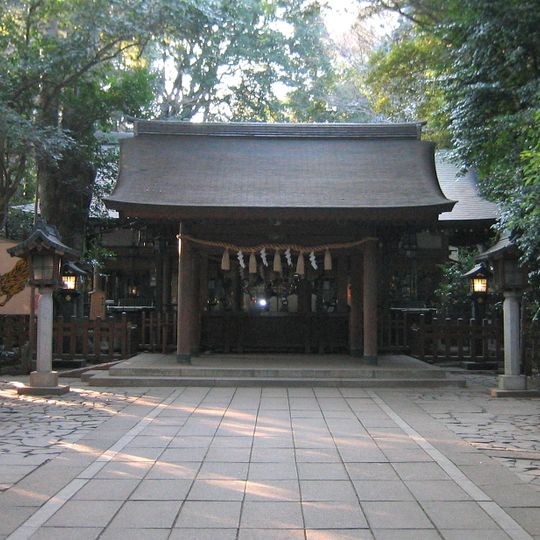
Suwa Shrine, shrine in Nagareyama, Chiba
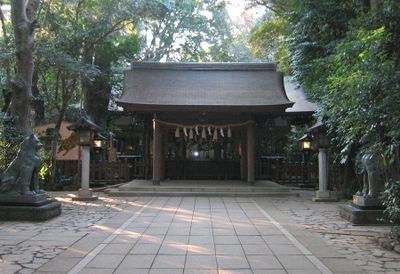
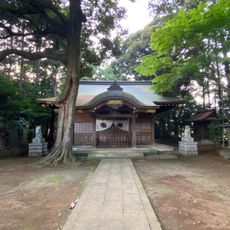
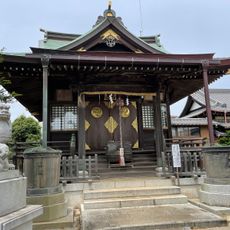
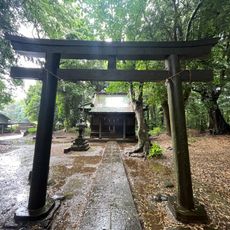
Suwa Shrine stands on a plateau at the watershed between the Tone and Edo river systems in Nagareyama. Its grounds cover about 10,000 tsubo, entered through a first torii, a second torii, a shrine gate, a third torii and a fence gate leading to the halls. The worship hall, rebuilt in 1846, faces forward under a broad shingled gabled roof, with a sacred rope and five white zigzag paper streamers hung between two round wooden pillars.
According to shrine tradition, it was founded in 807 (Daidō 2) when descendants of Emperor Tenmu's son Prince Takechi settled here and divided the Suwa Grand Shrine of Shinano as a guardian deity; a place of worship is said to have existed earlier, in Emperor Keikō's reign. Minamoto no Yoshiie is said to have stopped here during the Later Three Years' War and donated a horse on his return. The original hall burned in 1749; the honden was rebuilt in 1826 and the haiden in 1846, and both were designated Nagareyama city cultural properties in 1980.
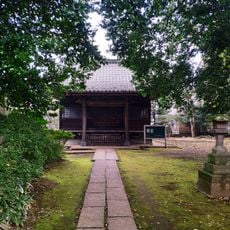
The shrine is nicknamed "Komaki no Osuvasama" and its crest is the Myojin-kaji of Suwa Taisha's Shimosha. Its grounds hold many subordinate shrines moved here from the neighbourhood, including Hime-miya (festival 20 January), Raiden (1 May) and Tenjin (25 March). Worshippers recite a prayer asking the great kami of Suwa to purify, protect and grant prosperity.
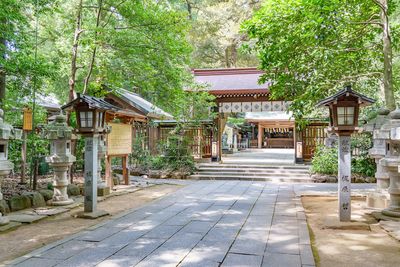
The shrine stands about 5 minutes on foot from Toyoshiki Station on the Tobu Noda Line, or about 15 minutes from Nagareyama-otakanomori Station on the Tsukuba Express and Tobu Noda Line. The grounds cover roughly 10,000 tsubo, entered through a first torii, a second torii, a shrine gate, a third torii and a sacred-fence gate before the hall. The approach is a paved stone path with a shallow step up to the stone base.
The shrine's crest is the myōjin-kaji, the stylised mulberry-leaf emblem of the Lower Shrine of Suwa Taisha in Nagano, and the deity enshrined here is Takeminakata-no-mikoto, the same as at the head shrine. The grounds also hold the Suwa Shrine site, where pottery shows people lived from the late Jōmon period.
The community of curious travelers
AroundUs brings together thousands of curated places, local tips, and hidden gems, enriched daily by 94,046 contributors worldwide.