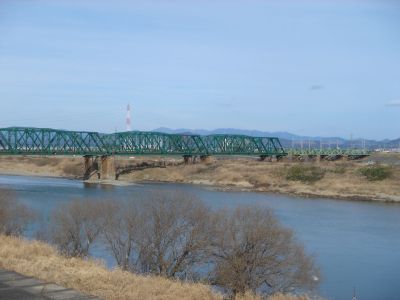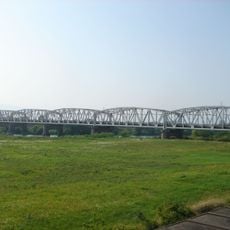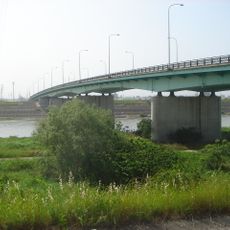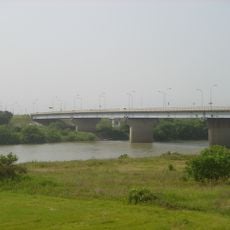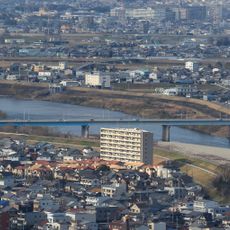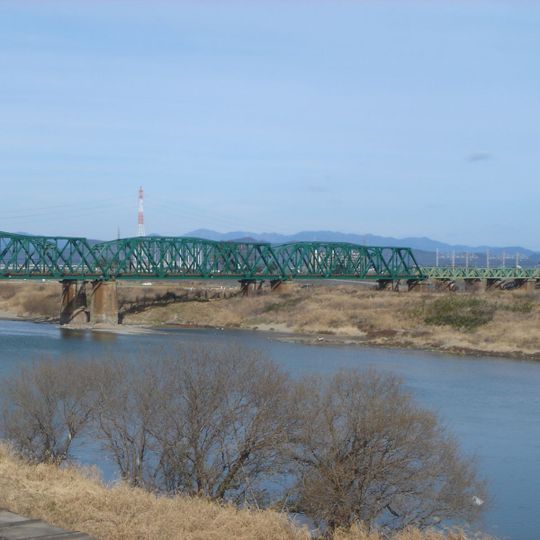
長良川橋梁, Railway bridge in Gifu, Japan.
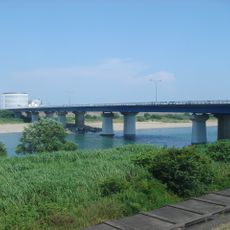
The Nagaragawa Bridge is a railway bridge on the Tokaido Main Line that carries two sets of tracks across the Nagara River between Gifu City and Mizuho City, spanning roughly 460 meters. The structure uses two separate construction methods for each track direction, making it a working example of railway engineering from different time periods.
The original bridge opened in 1887 but the cast iron piers failed during the 1891 Nobi earthquake and required complete rebuilding. A second track was added much later in 1960 to meet growing rail traffic demands.
The bridge features prominently in Japanese transportation infrastructure, connecting communities along the Tokaido Main Line through central Japan.
Travelers can view the bridge from the surrounding riverside areas, with good vantage points from nearby towns and the riverbanks. The structure is actively used by trains throughout the day, so visitors can watch trains crossing while exploring the area.
Each track employs a different truss design, with one side using Warren trusses and the other using Pratt trusses. This mix shows how engineering standards evolved during the separate construction periods of the two tracks.
The community of curious travelers
AroundUs brings together thousands of curated places, local tips, and hidden gems, enriched daily by 92,714 contributors worldwide.