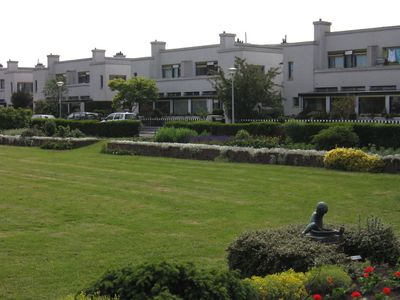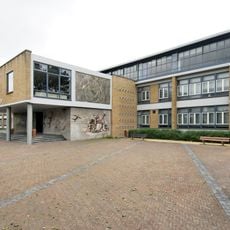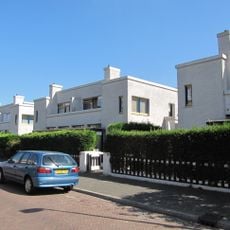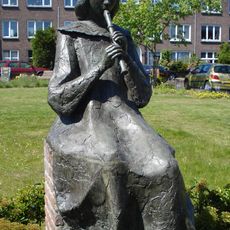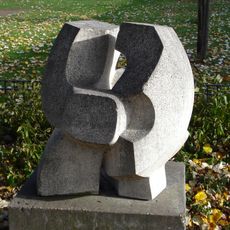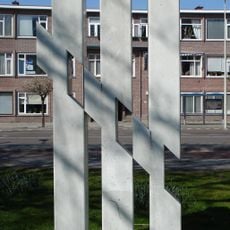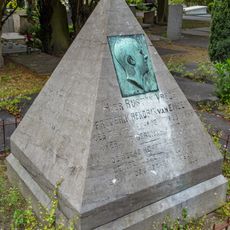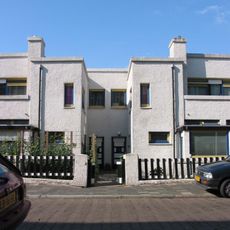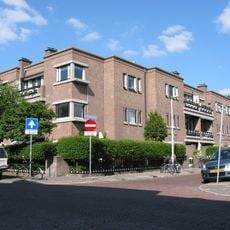
Papaverhof, Residential complex in Bomen- en Bloemenbuurt, The Hague, Netherlands.
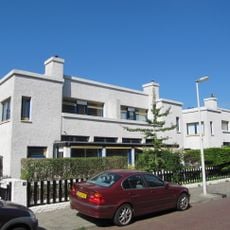
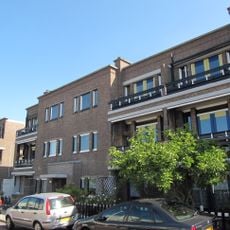
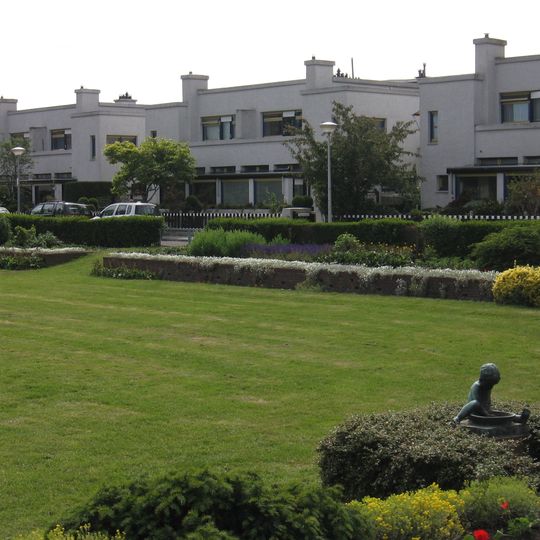
Papaverhof is a residential complex containing 128 houses arranged in a horseshoe formation surrounding a sunken central garden. Individual dwellings feature street-facing living spaces with kitchens toward the rear and large windows opening to the internal courtyard to allow abundant natural light throughout the interiors.
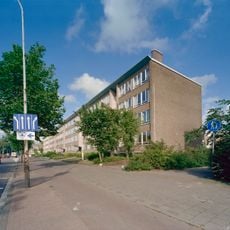
Architect Jan Wils completed this residential ensemble in 1921, initially using slag concrete before later switching to brick covered with cement for additional structures. The development occurred during a time when modern architectural approaches were emerging across the Netherlands.
The complex demonstrates design principles from the De Stijl movement through its geometric arrangement of buildings and repetitive structural forms. Walking through reveals how these strict modernist ideals shaped the everyday appearance of the residential spaces.
The complex is best explored on foot, as it was designed for pedestrian circulation with narrow pathways running between the houses. Take time to wander slowly through the ensemble and observe both the central garden and the architectural details of the individual facades.
After World War II, rubble from bomb damage was repurposed in constructing concrete structures within the complex, demonstrating early sustainable building practices. This resourceful reuse of materials was both a practical response to wartime consequences and an innovative architectural approach.
The community of curious travelers
AroundUs brings together thousands of curated places, local tips, and hidden gems, enriched daily by 91,470 contributors worldwide.