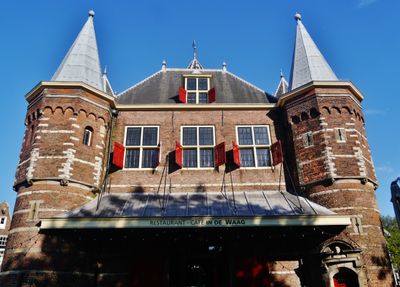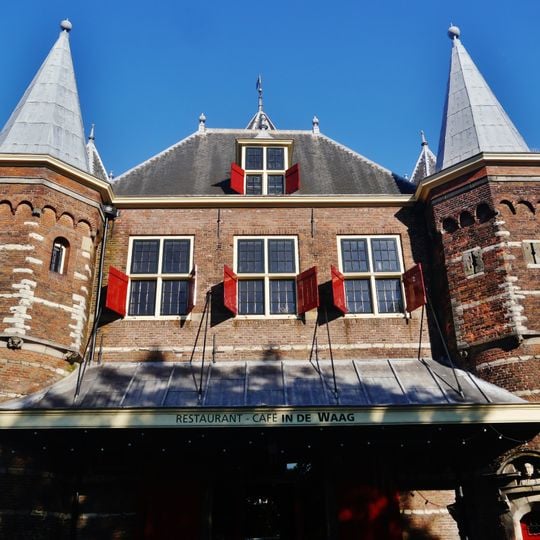
Waag, Amsterdam, Gothic weigh house at Nieuwmarkt, Netherlands.
The Waag is a Gothic weigh house at Nieuwmarkt in Amsterdam, Netherlands, that also served as an anatomical theatre and former city gate. The building displays eight defensive towers connected by brick walls, with large semicircular arches opening in different directions onto Nieuwmarkt square.
The building was erected in 1488 as the city gate Sint Antoniespoort, marking Amsterdam's eastern boundary at the time. When the city expanded its walls in 1617, the gate lost its defensive role and was converted into a weighing station for trade goods.
The surgeons' guild established the Theatrum Anatomicum in the upper floor in 1691, a room where public dissections took place. Rembrandt immortalized this tradition in his painting of Dr. Nicolaes Tulp, which depicts such a demonstration.
The ground floor now houses Restaurant-Café In de Waag, which is open to visitors. The upper floors are occupied by Waag Society, an organization focused on technology and art projects.
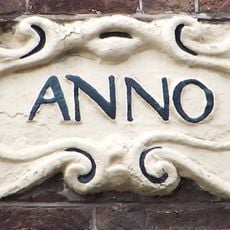
The building is the oldest surviving non-religious structure in Amsterdam and contains the city's earliest stone tablet. This tablet bears the date April 28, 1488, marking the day the construction was completed.
The community of curious travelers
AroundUs brings together thousands of curated places, local tips, and hidden gems, enriched daily by 91,567 contributors worldwide.