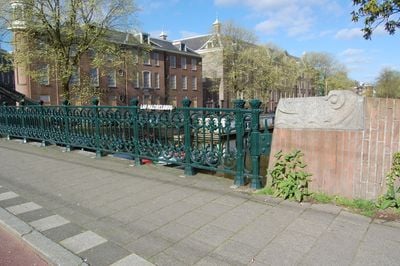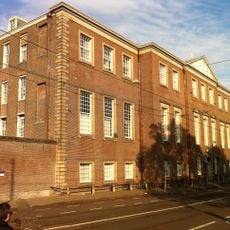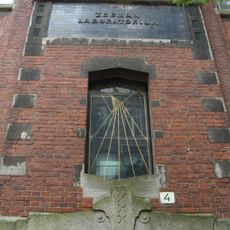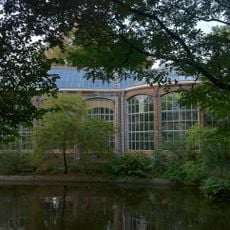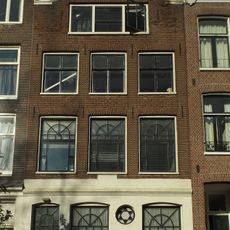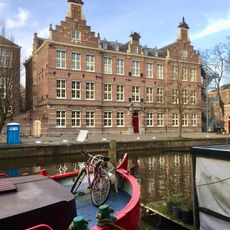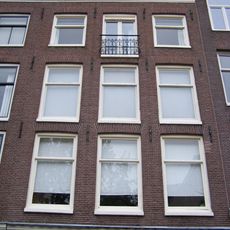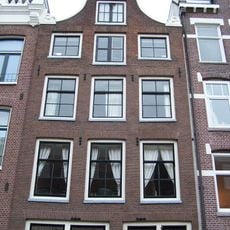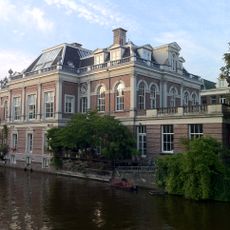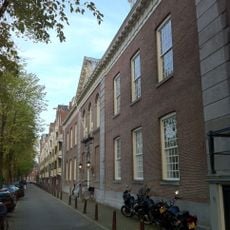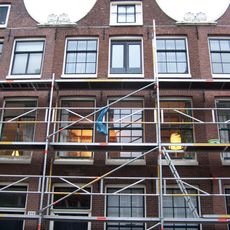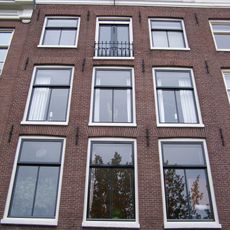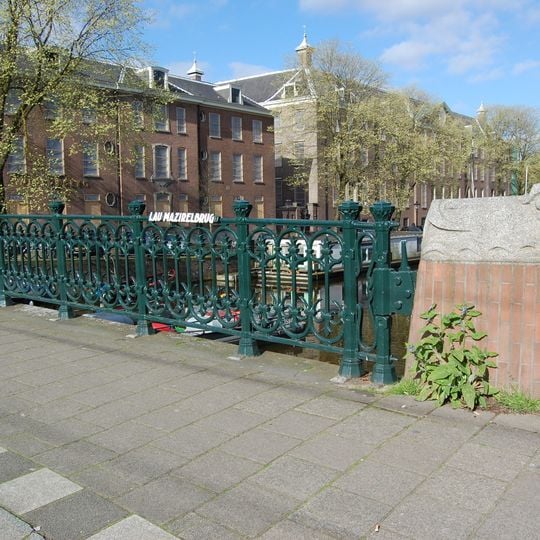
Wittenberg, Rijksmonument complex on Nieuwe Keizersgracht, Amsterdam, Netherlands.
The Wittenberg complex stands as a well-preserved example of 18th-century Dutch institutional architecture, featuring traditional brick facades and multiple connected buildings that once served as residential care facilities.
Originally constructed in 1772 by architect Coenraad Hoeneker as the Lutheran Diaconiehuis, the building was funded through the inheritance of Abraham and Johanna Maria Kromhuijsen to house 300 elderly residents.
The complex houses the Luther Museum Amsterdam, which documents the history of the Lutheran church in the city and showcases the community's philanthropic activities throughout centuries of social service.
Following extensive renovation in 2017, the former care facility now operates as a short-stay apartment complex with 115 residential units, accessible through heritage tourism routes and museum visits.
During World War II, writer Jan de Hartog lived in hiding within the building's walls, later drawing inspiration from his experiences there to create his famous theatrical work 'The Fourposter'.
The community of curious travelers
AroundUs brings together thousands of curated places, local tips, and hidden gems, enriched daily by 90,991 contributors worldwide.