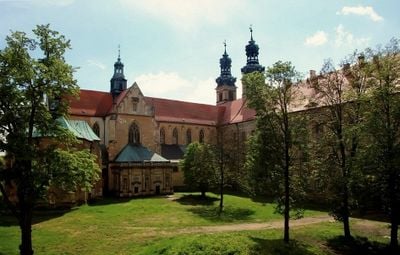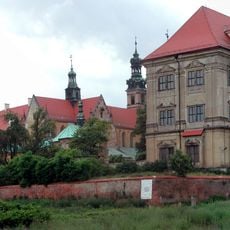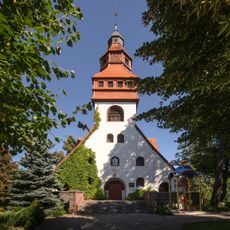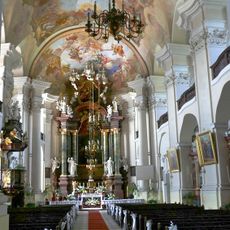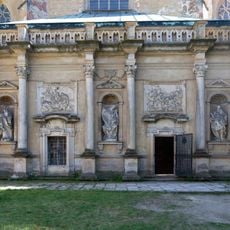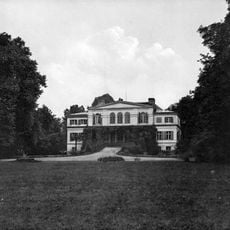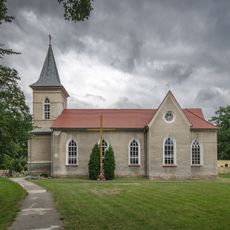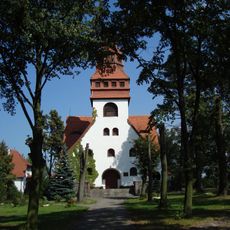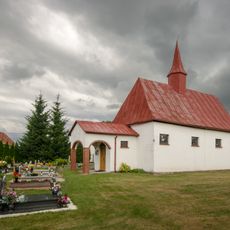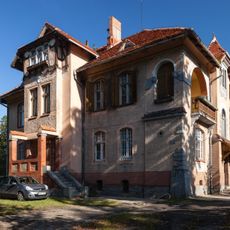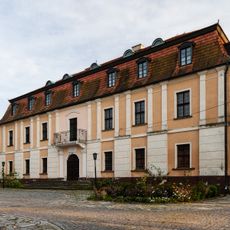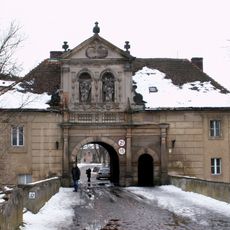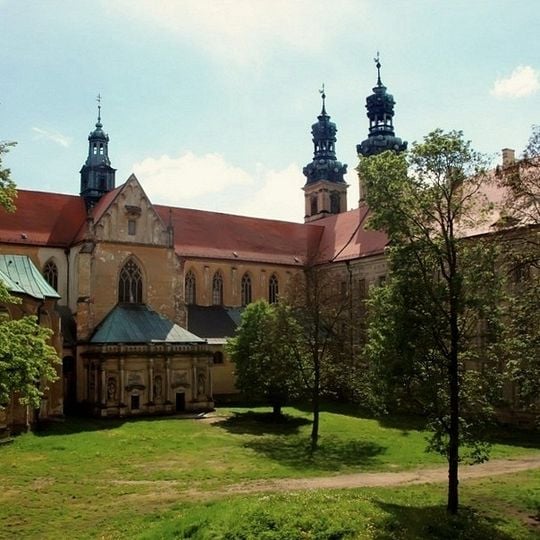
Lubiąż Abbey, Cistercian abbey in Lubiąż, Poland.
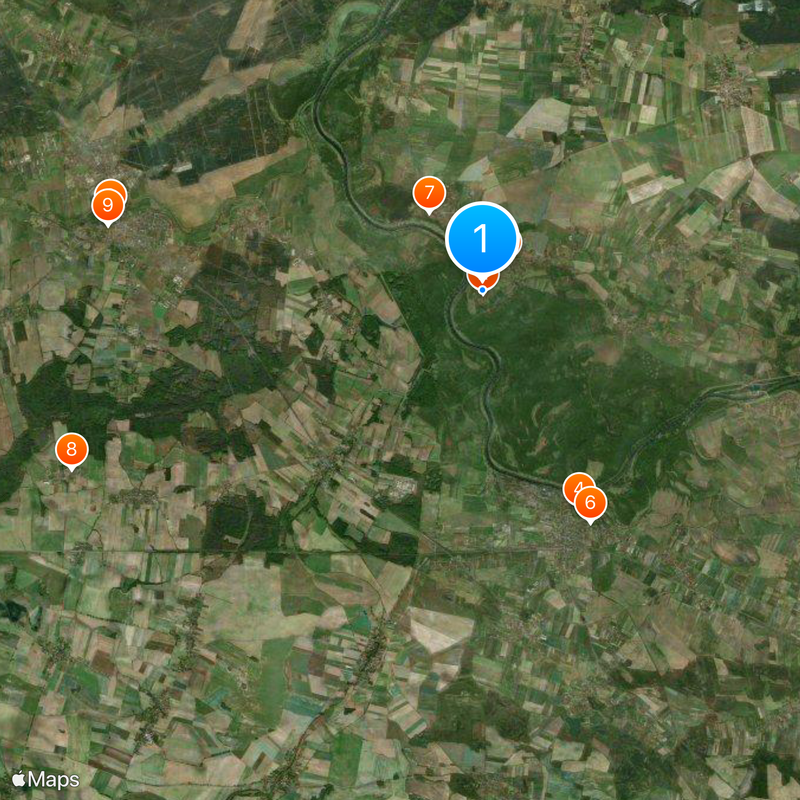
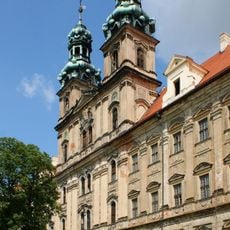
Lubiąż Abbey is a baroque monastery compound in the town of Lubiąż, Poland, extending 223 meters along the Oder River banks. The structure contains more than 600 windows and consists of several wings arranged around two inner courtyards, forming one of the largest monastic complexes in Europe.
Duke Bolesław I established the monastery in 1175, settling Cistercian monks from Pforta Abbey in the densely forested region. The compound was rebuilt in baroque style during the 17th and 18th centuries according to plans by different architects, replacing the original medieval structure.
The baroque library hall ranks among the finest rooms of its kind in Europe, displaying elaborate frescoes across its vaulted ceilings. Both churches within the complex now host concerts and cultural events, allowing visitors to experience the original monastic acoustics.
The Fundacja Lubiąż foundation has managed restoration efforts since 1989 and opens different sections of the compound to visitors while other parts remain under conservation. Guided tours provide access to the main rooms including the churches and library, with sturdy footwear recommended due to uneven floors.
During World War II, Telefunken used the compound as a radar receiver factory, with forced laborers from Luxembourg manufacturing military equipment. The underground passages and cellars served as production sites and remain partially accessible today.
The community of curious travelers
AroundUs brings together thousands of curated places, local tips, and hidden gems, enriched daily by 92,291 contributors worldwide.