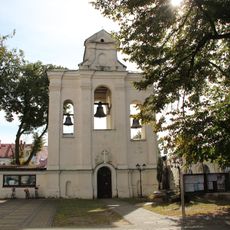
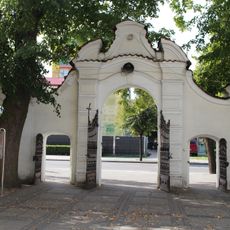
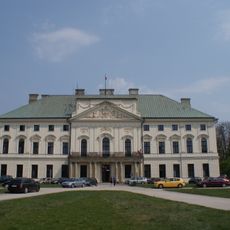
Saint Lawrence church in Lubartów, Baroque church building in Lubartów, Poland
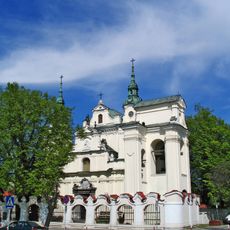
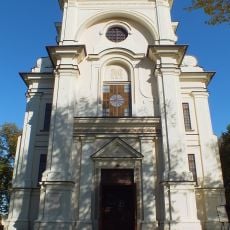
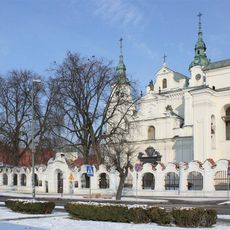
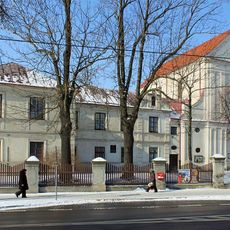
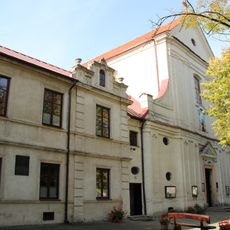
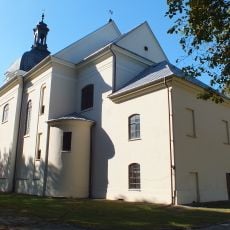
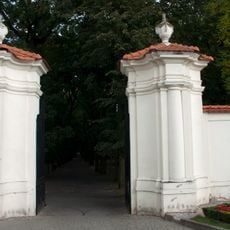
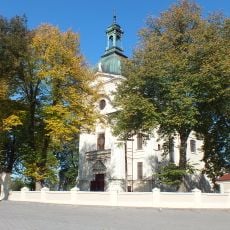
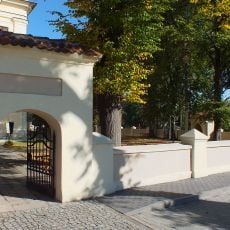
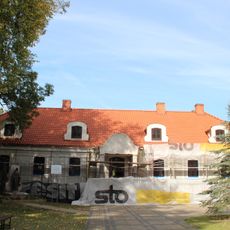
Saint Lawrence church in Lubartów was built in 1737–1741 in a Tuscan Baroque style to a design by Paweł Antoni Fontana, court architect of the Sanguszko family. It has a single nave closed by a short rectangular chancel, with two rows of low chapels flanking the nave. The adjoining three-winged, two-storey monastery, enclosed by a wall, stands to the south of the church around a courtyard.
The church was built in 1737–1741 to a design by Paolo Antonio Fontana, court architect of the Sanguszko family, and funded by Mikołaj Krzyniecki and Prince Paweł Karol Sanguszko. During the November Uprising, Polish troops under General Wojciech Chrzanowski defended the monastery. In the January Uprising, Russian artillery fired on the church, and cannonballs remain embedded in its wall. The monastery was suppressed in 1867, and the Capuchins returned in 1938.
The church is dedicated to Saint Lawrence, whose martyrdom is the subject of the main altarpiece by Szymon Czechowicz. The painter's Lubartów cycle was made shortly after his return from studies in Rome, and Italian influence is visible in the canvases. The altars themselves are of oak, left without gilding.
The complex sits centrally in Lubartów and is easily reached on foot from the town's main areas. Visitors should know that this remains an active place of worship, so access may vary depending on services and religious observances.
The church holds works by Szymon Czechowicz, one of Poland's most influential painters of the 18th century, making it a rare location to see this master's work in a small-town setting. His paintings here display a level of artistry and vision usually found only in major urban centers.
The community of curious travelers
AroundUs brings together thousands of curated places, local tips, and hidden gems, enriched daily by 93,990 contributors worldwide.