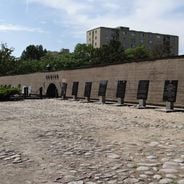
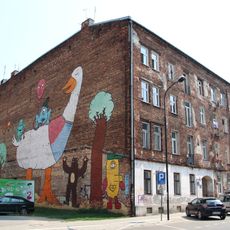
Ząbkowska Street in Warsaw, Architectural ensemble in Praga-Północ, Warsaw, Poland
Ząbkowska Street runs about a kilometre from Targowa Street through Praga-Północ, lined with three- and four-storey tenement houses put up mainly in the 1880s and 1890s for workers and traders of the district. Facades mix brick, stucco and Neo-Renaissance and early Modernist detailing; look for the metal balconies, gateways with original doors and the courtyard wells behind the street front.
The street's tenement houses date mainly from 1880–1914, when Praga-Północ developed as a district of rented apartments for workers and artisans rather than a middle-class quarter. The name Ząbkowska comes from the Ząbkowski family, who owned land here in the eighteenth century. The buildings survived World War II largely intact, and many were entered in the municipal register of monuments.
The street's name comes from the Ząbki estate, and its pre-war character is recalled in the brick facades and carved doorways of the tenements. Today the former shops host small galleries, music clubs and craft workshops, and the annual Praga festival uses the street as an open-air stage.
Ząbkowska runs roughly a kilometre from Targowa Street eastward, with the former Koneser Vodka Factory on its northern side; the cobbled roadway and narrow pavements make comfortable shoes useful. The street is served by tram stops on Targowa and by the nearby Stadion Narodowy metro line, and the bars and eateries along it fill up in the evening, so daytime visits are quieter.
The Koneser complex on the street's eastern end began as the Warsaw rectification plant in the 1890s, later producing vodka under the Koneser name. Its red-brick factory halls, some with surviving industrial detailing, now house the Polish Vodka Museum, shops and galleries.
The community of curious travelers
AroundUs brings together thousands of curated places, local tips, and hidden gems, enriched daily by 93,095 contributors worldwide.