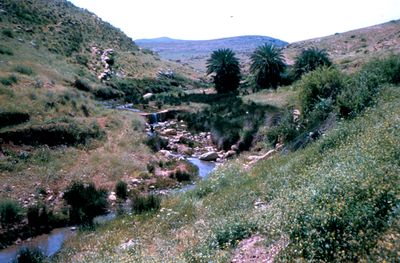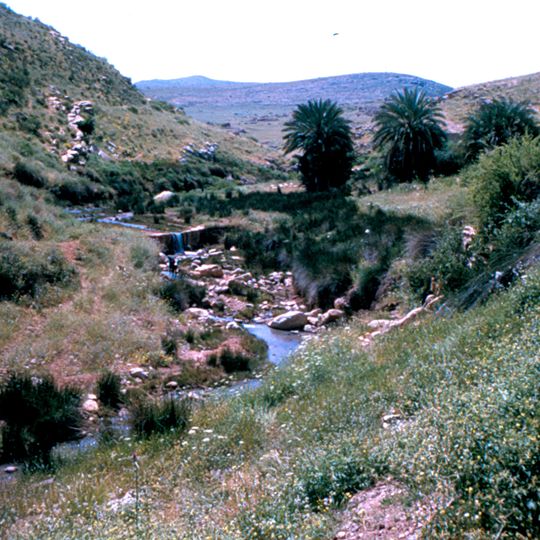
Ḩammām al Māliḩ, Hot spring in Jordan Valley between Israel and Palestine.
Ḩammām al Māliḩ is a hot spring in Wadi al-Malih, about three kilometres west of the Jordan Valley road on Route 5799 toward Tubas. The spring water reaches 36°C, contains 1,500 mg of chloride per litre and flows at 162 cubic metres per hour. The Latin Church built a two-storey structure over the springs, now known as Khirbat al-Malih, surrounded by eucalyptus and palm trees.
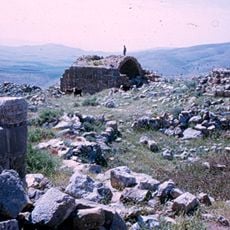
The Latin Church built a two-storey structure over the springs, Khirbat al-Malih, to house bathers; the baths have stood abandoned since the Six-Day War. In 1981 the area became a firing zone for the Paratroopers training base at Camp Snor, with two small camps, Hammam Du"p and Hammam Maflag. The base was vacated in 2003 when training moved to Camp Eitan near Kibbutz Shomria.
The Latin Church owns the site and built a two-storey structure over the springs, Horbat al-Malih, once housing bathers; eucalyptus and palm trees grow around it. The springs have been abandoned since the Six-Day War, so bathing is no longer maintained. Summer brings blooming spiny sow-thistle around the water.
The springs lie in Wadi al-Malih, about 3 km west of the Jordan Valley road on Route 5799 toward Tubas, inside the Nahal Bezek Illit nature reserve. There are no organised bathing facilities and the neglected pools are not recommended for swimming. The water is 36°C, about 30 cm deep, and gives off a sulphur smell; summer brings flowering spiny thistles around the spring.
The spring yields 162 cubic metres of water an hour at 36°C, carrying 1,500 mg of chloride per litre and a sulphur smell noticeable around the valley. A short distance away, at the bend in the wadi, the freshwater spring Ein Hilu holds only 371 mg of chloride per litre but flows at just 7 cubic metres an hour.
The community of curious travelers
AroundUs brings together thousands of curated places, local tips, and hidden gems, enriched daily by 93,116 contributors worldwide.