Oradea Citadel, Medieval fortress in Oradea, Romania
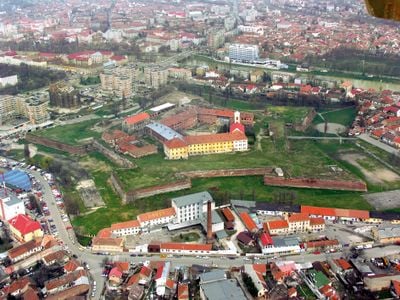
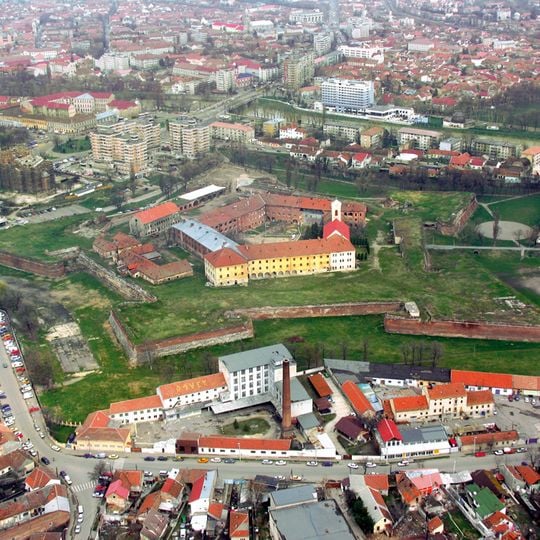
Cetatea Oradea is a pentagonal fortress whose inner buildings were laid out concentrically by the Italian architect Giacomo Resti, with walls parallel to the outer ramparts. The moat was filled during sieges with thermal water brought by conduits from the Peța river. The main gate stood on the south side, and the princely palace is a late-Renaissance central castle type.
The site began in the late 11th century as a bishop's residence and was gradually expanded into a military fortress from the 13th century onward. After several sieges and handovers it shifted between Habsburg and Ottoman control until it lost its military role in the mid-19th century.
The fortress name derives from the Hungarian Várad, meaning fortified place, reflecting its strategic position along the Crișul Repede riverbanks. Today locals and travelers walk through the grounds while restored rooms host exhibitions.
Visitors can explore most of the grounds freely, though some interior rooms are accessible only with a guided tour. The pathways are mostly level and the bastions offer good views over the river and the city.
The moat was filled in times of siege with thermal water carried by conduits from the Peța river, not the Crișul Repede. The fortress is also said to have been unconquerable because of vast underground passages linking it to the outside.
The community of curious travelers
AroundUs brings together thousands of curated places, local tips, and hidden gems, enriched daily by 93,153 contributors worldwide.