Ilmen glint, Natural monument in Novgorod Oblast, Russia
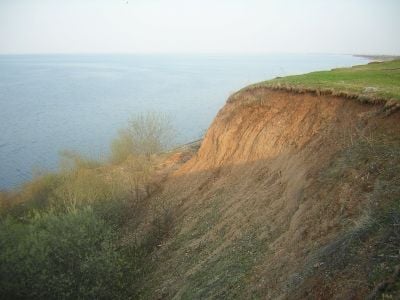
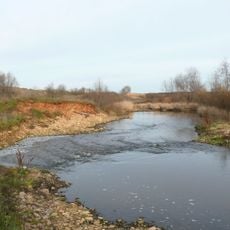
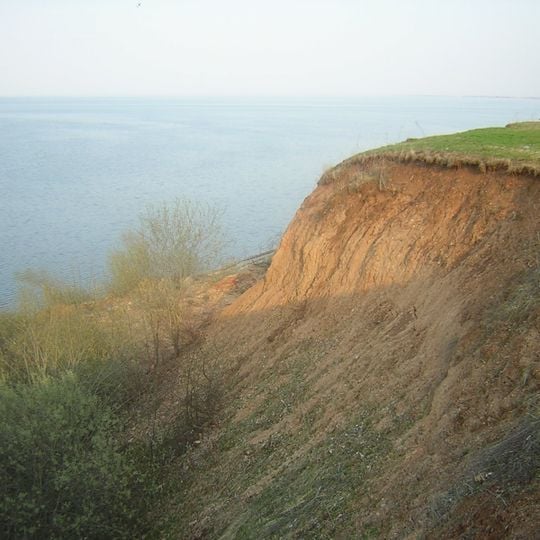
The Ilmen glint is an 8 km escarpment on the southwest shore of Lake Ilmen, between the Lovat and Shelon deltas. Its face, up to 15 m high between Korostyn and Pustosh, exposes Devonian clays, sands and limestones; the upper Bureg layers are yellowish-brown crystalline limestone. The cliff top is grass-covered and overhangs the eroded slope.
This escarpment formed hundreds of millions of years ago when sea deposits accumulated and hardened into stone layers. It gained protection in 2001 because scientists recognized how valuable it is for understanding ancient ocean conditions and life from that era.
The cliff's name comes from the Danish word klint, meaning a steep bank or ledge. Its blue-green and red clays and white sands yield brachiopod shells, fish bone fragments and charophyte remains from the Late Devonian sea. The limestone beds near the Psy zha River are named Bureg layers after the nearby village of Buregi.
Visit when the ground is dry, as the slopes become slippery and walking becomes difficult after rain. Wear sturdy shoes and stay away from the cliff edges where rocks can fall unpredictably.
The layers here hold fossilized remains of ancient sea creatures that show what ocean life was like hundreds of millions of years ago. Scientists from around the world visit to read these natural records and understand how the planet has changed.
The community of curious travelers
AroundUs brings together thousands of curated places, local tips, and hidden gems, enriched daily by 95,569 contributors worldwide.