Gulag-Museum, History museum in central Moscow, Russia
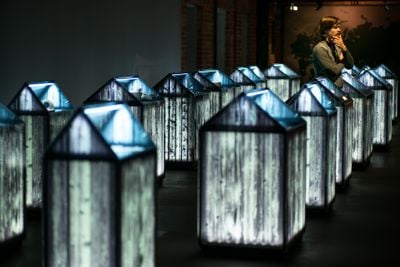
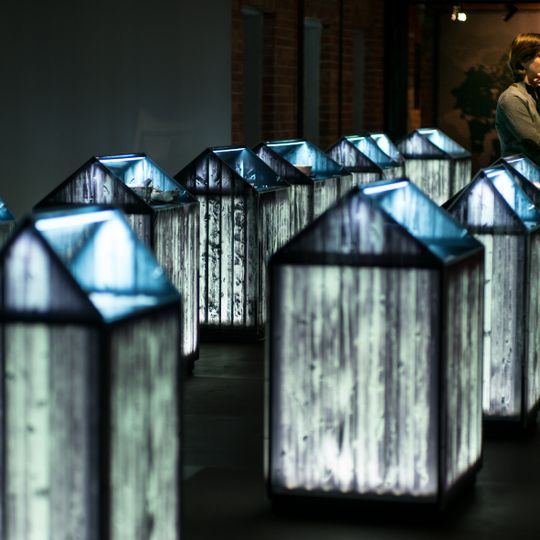
The Gulag Museum is a memorial institution dedicated to the Soviet camp system in central Moscow. The rooms are spread over several floors and show original items like metal doors, clothing, and everyday objects from people in the labor camps.
The museum was established by Moscow government decree on 31 July 2001 on the initiative of Anton Antonov-Ovseyenko, a writer and journalist who spent more than thirteen years in Gulag camps. He was repressed after his father, the revolutionary Vladimir Antonov-Ovseyenko, was convicted in the 1930s as an enemy of the people. The first exhibition opened in 2004 in an 18th-century building on Petrovka Street; in 2015 the museum moved to a former 1906 building at 1st Samotyochny Lane.
The building takes its name from the acronym for the Main Administration of Camps and uses many personal items like letters and photos from people who lived through those times. Visitors see not just display cases, but also reconstructed spaces that help them understand the conditions people faced.
The museum stood at 1st Samotyochny Lane 9, about 3 km north of Red Square, in a 1906 building by architect Nikolai Zherikhov. It was open daily except Monday from 12:00 to 21:00, and admission was free. The red brick facade was wrapped in copper wire intended to darken with oxidation.
A large wall map shows the geographic spread of camps across the entire territory of the country. Some recovered items come from execution sites, where they lay buried in the ground for many years before being unearthed.
The community of curious travelers
AroundUs brings together thousands of curated places, local tips, and hidden gems, enriched daily by 94,251 contributors worldwide.