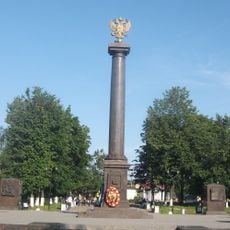
Partizan's glory, War memorial in Luga, Russia
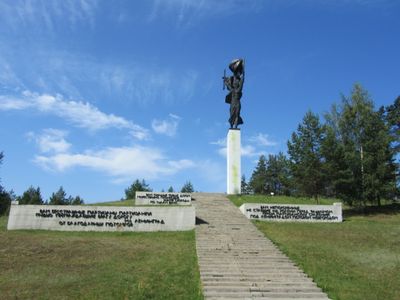
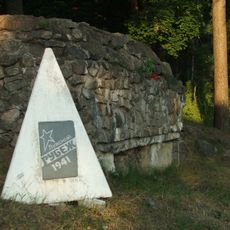
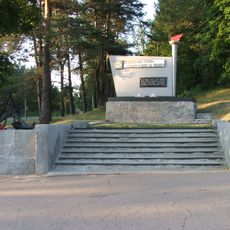
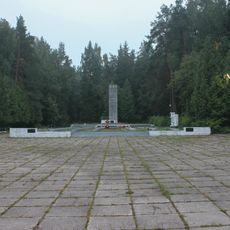
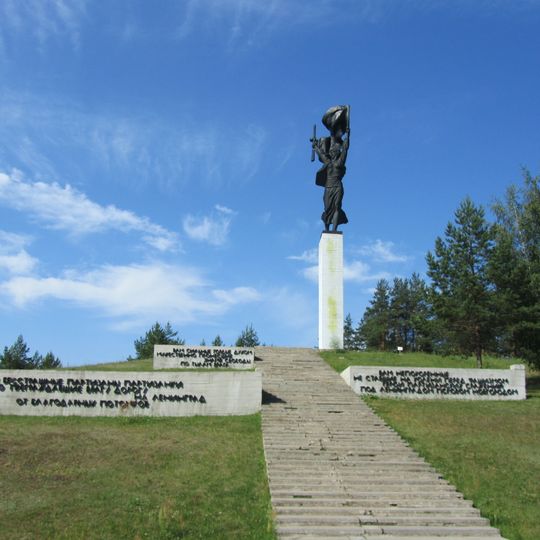
Partizan's glory is a memorial complex in Luga composed of natural stones arranged in front of a central structure bearing the names of resistance groups. Each stone represents one of thirteen partisan groups that fought in the Leningrad region during World War II.
The complex was built between 1973 and 1975 and opened on 10 May 1975, the 30th anniversary of the Victory. Its authors, architect Vyacheslav Bukhaev and sculptors Viktor Bazhinov, Vladimir Gorevoy, Sergei Kubasov and Vladimir Neimark, received the State Prize in 1978. A presidential decree of 5 May 1997 removed it from the federal heritage list and reclassified it as a regional monument.
The memorial displays the names of partisan groups that operated in this region, keeping alive the memory of local resistance fighters. Visitors can connect each stone to a specific group and understand their role in the community's defense.
The memorial is located in Luga and easily accessible to visitors interested in World War II history. It is best to visit during daylight hours to clearly read the inscriptions on the stones.
The 20-metre statue of a girl with a submachine gun is said to have been modelled on partisan Antonina Petrova, who died fighting in Luga district and was posthumously named a Hero of the Soviet Union. A new stele added in July 2016 honours internationalist partisans who fought in the area in the winter of 1942–1943.
The community of curious travelers
AroundUs brings together thousands of curated places, local tips, and hidden gems, enriched daily by 93,291 contributors worldwide.