Старицкое городище, Hillfort and archaeological site in Staritsa, Russia
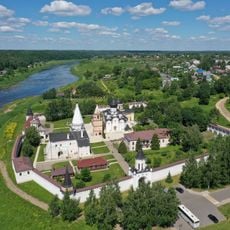
Staritskoye Gorodishche is the site of the Staritsa Kremlin, on a promontory where the Starichonka River meets the Volga. It consists of two parts: the Old Hillfort (the kremlin) and the New Hillfort (the outer ostrog), encircled by preserved earthen ramparts. The ramparts rise up to 80 meters above the Volga, and the entrance is paved with cobblestones.
Staritsa is first mentioned in a chronicle in 1297, when a fortress was built on the Volga. In 1366 Prince Mikhail Alexandrovich strengthened the citadel with a 178-metre moat and a 4.5-metre rampart. In 1391 an outer town with wooden walls and towers was added. In 1505 the town became the centre of the Staritsa principality, and in 1581 Ivan the Terrible received the papal envoy Antonio Possevino here.
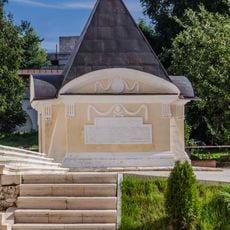
The name Staritskoye Gorodishche refers to the fortified settlement itself, and the site is still marked by its earthen ramparts. A 1903 excavation uncovered an Armenian inscription with some Georgian letters on an ornamented semicircular wall, which scholar Boris Turayev examined. The Old Gorodishche now stands empty, while the New Gorodishche holds the inactive Borisoglebsky Cathedral and a 19th-century bell tower.
The site lies on the north-western edge of Staritsa, on a promontory where the Starichonka meets the Volga. The surviving ramparts of the Old and New hillforts rise up to 80 metres above the Volga, so the ground is uneven. The entrance to the kremlin is paved with cobblestones and flanked by the white-stone forges of 1792.
The site reveals multiple building phases, showing how the fortification took on different forms and evolved across the centuries. These layers help visitors understand how the community adapted to changing needs.
The community of curious travelers
AroundUs brings together thousands of curated places, local tips, and hidden gems, enriched daily by 95,020 contributors worldwide.