Batagaika crater, Thermokarst depression in Verkhoyansk district, Russia
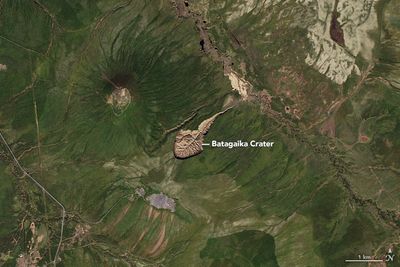
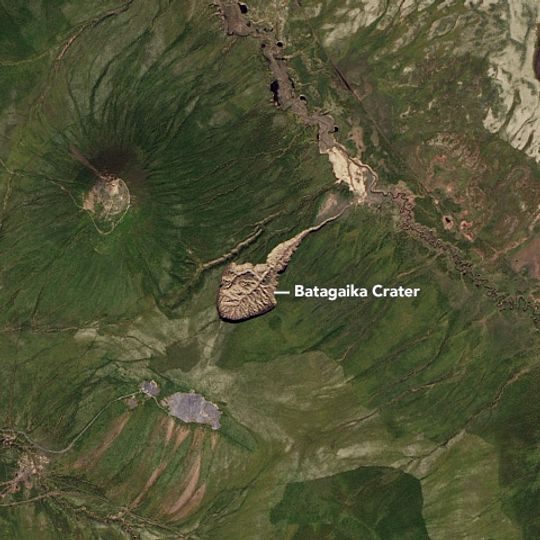
Batagaika crater is a one-kilometre-long thermokarst gash in the East Siberian taiga, up to 100 metres deep, 10 km southeast of Batagay in the Verkhoyansky District. Its broad lower bowl is a steep wall of pale tan and grey-brown ground scored by close vertical gullies, and a narrower channel tapers upward across the green slope. The rim is unstable, with regular landslides feeding the growing hollow.
A geological survey team first recorded soil erosion at the site in 1969, after the surrounding taiga had been cleared and the ground began to subside. By 2016 the headwall was retreating more than 10 metres a year, and by June 2024 the crater was growing by about one million cubic metres annually, two-thirds of it from melting ice.
Locals call it the "gateway to hell", a name used in Russian media reports on the crater. The Batagaika name comes from the Batagayka, a right tributary of the Yana flowing nearby. Researchers from the Melnikov Permafrost Institute in Yakutsk and the North-Eastern Federal University's institute of applied ecology study the site, and since 2011 their work has exposed frozen forests, pollen and carcasses.
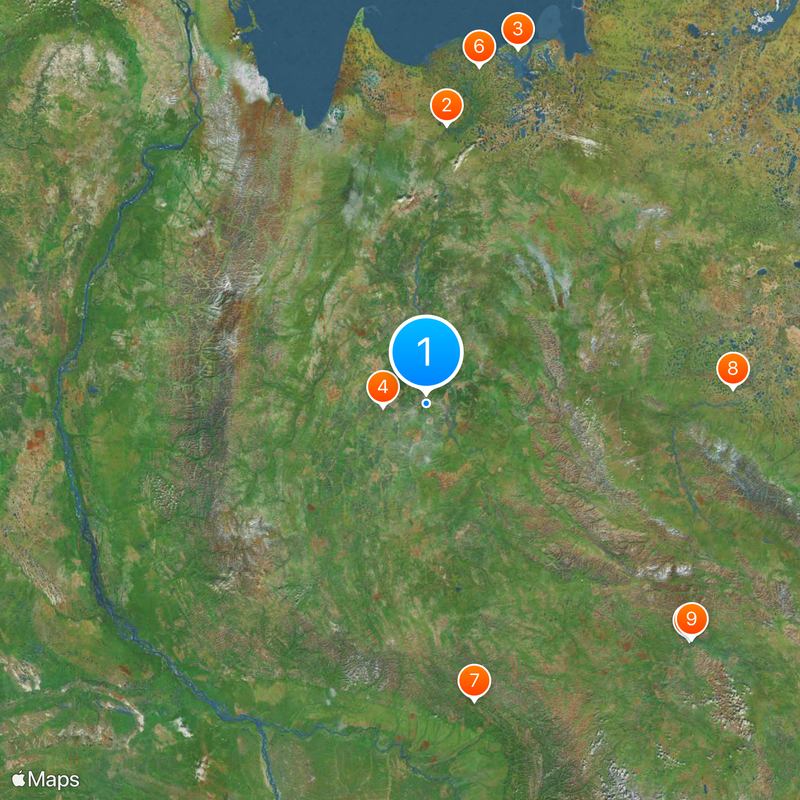
The crater lies 10 km southeast of Batagay and 5 km northeast of Ese-Khayya, about 660 km north-northeast of Yakutsk, with no road to the rim; access is by helicopter or off-road vehicle. The rim is extremely unstable, with regular landslides into the bowl, so keep back from the edge. Below the cliff face, steep hills and gullies drop to the floor.
The slump has exposed a mummified Lena horse foal about 4,400 years old, found in 2009, along with the remains of a bison calf. Researchers from the Research Institute of Applied Ecology of the North at North-Eastern Federal University have worked here since 2011, and the thawing mud also yields ancient pollen and wood.
The community of curious travelers
AroundUs brings together thousands of curated places, local tips, and hidden gems, enriched daily by 94,658 contributors worldwide.