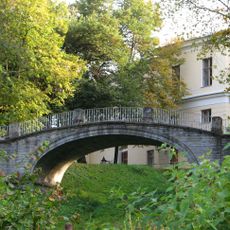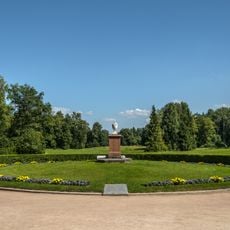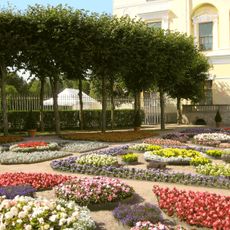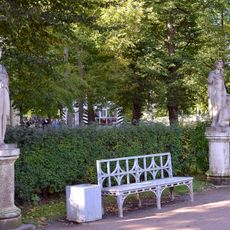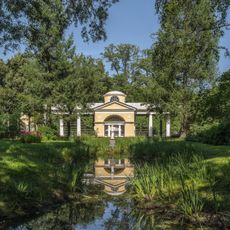
Rossi Pavilion, Neoclassical pavilion in Pavlovsk Park, Russia.
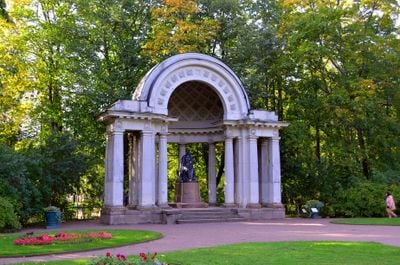
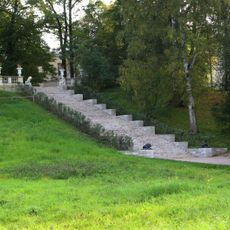
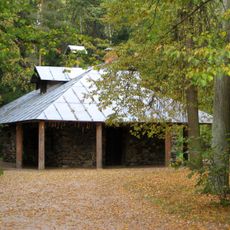
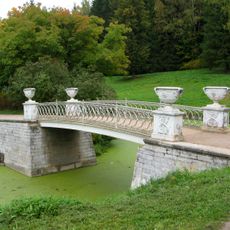
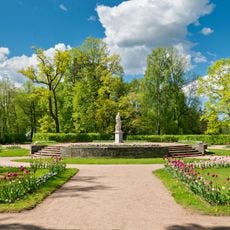
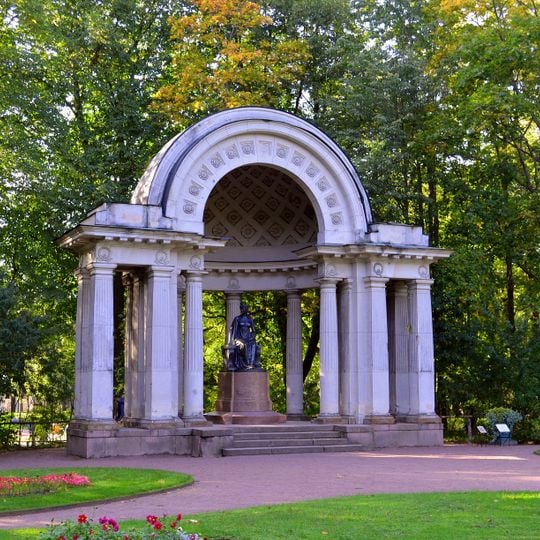
The Rossi Pavilion is a white neoclassical structure with symmetrical proportions and slender columns set within Pavlovsk Park. The building sits in a quieter area where park paths converge, allowing visitors to approach and view it from multiple angles.
Built in 1816 by architect Carlo Rossi, this pavilion was created as a monument to Maria Feodorovna, wife of Emperor Paul I. Its construction coincided with a period when Pavlovsk was being developed as one of Russia's premier imperial parks.
The pavilion takes its name from architect Carlo Rossi and reflects how imperial estates used classical buildings as symbols of power and refinement. Walking through the park, visitors can see how such structures shaped the landscape as places of contemplation and prestige.
The pavilion sits south of the park's main avenue and is easily reached on foot from the various entrances to the Pavlovsk complex. The best time to visit is during warmer months when park paths are clear and the surroundings are fully visible.
Beyond being a memorial, this structure also functioned as a shelter where park visitors could rest and take refuge from the elements. This dual purpose reveals how park architecture served both commemoration and the practical needs of daily imperial life.
The community of curious travelers
AroundUs brings together thousands of curated places, local tips, and hidden gems, enriched daily by 90,777 contributors worldwide.