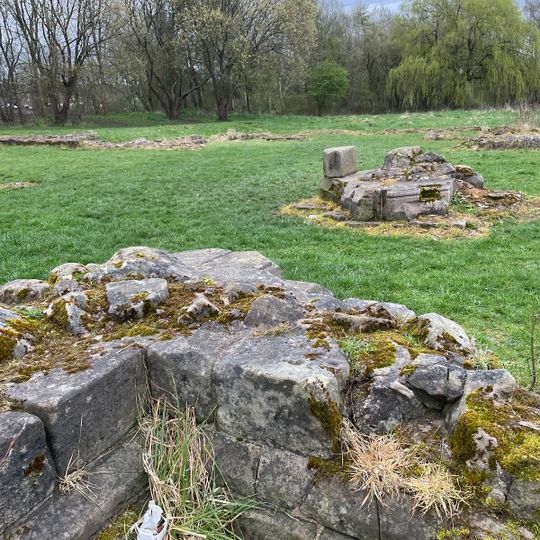
Hulton Abbey, Cistercian monastery ruins in Abbey Hulton, England.
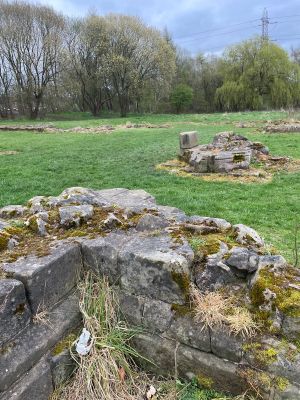
Hulton Abbey is a ruined Cistercian monastery in Stoke-on-Trent, set within a public park where stone foundations remain visible at ground level. The layout of the church, cloisters, and living quarters can be read directly from the exposed stonework.
The monastery was founded in 1219 as a daughter house tied to a larger Cistercian community, and it functioned as a centre of religious life in the region for several centuries. It was abandoned following the dissolution of the monasteries under Henry VIII and gradually fell into ruin.
Excavations at the site uncovered 91 burials, including the remains of Hugh Despenser the Younger, which showed clear signs of his violent execution in 1326. This makes the site one of the few places in England where such a historically charged burial has been found and studied.
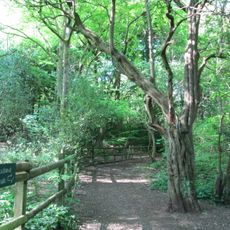
The ruins sit within a public park and can be visited at any time without charge. Paths lead through the site, so it is easy to walk around the remains even for those unfamiliar with the area.
The monks at Hulton ran a tannery and kept fish ponds on the grounds, and they also produced pottery, which was unusual for a religious house of this type. Sheep farming added another layer to the community's daily work, making it closer to a small self-sufficient settlement than a purely contemplative retreat.
The community of curious travelers
AroundUs brings together thousands of curated places, local tips, and hidden gems, enriched daily by 91,839 contributors worldwide.