Mayburgh Henge, Prehistoric henge in Eamont Bridge, England
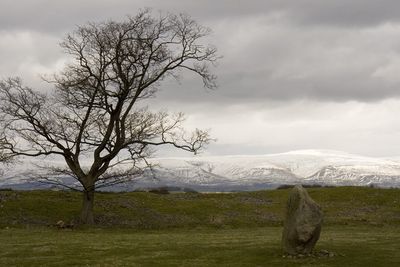
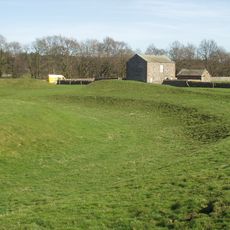
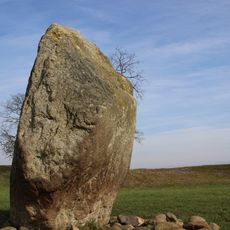
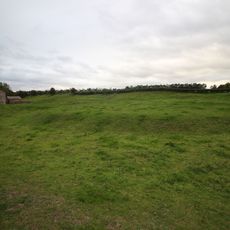
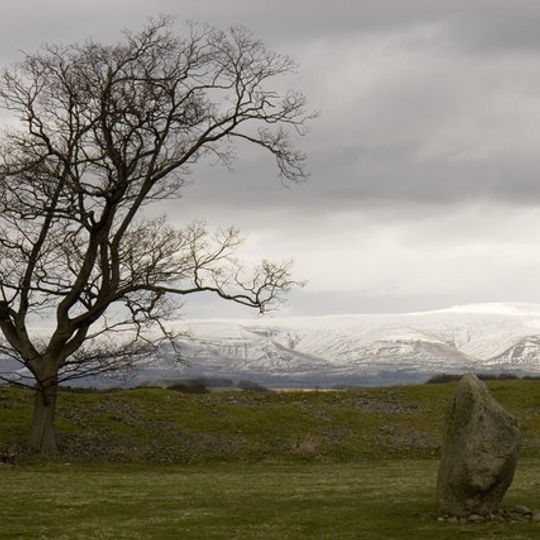
Mayburgh Henge is a prehistoric earthwork near Eamont Bridge, south of Penrith in England, built from river cobbles stacked into a roughly circular bank. The bank reaches several meters in height and encloses a flat interior where a single standing stone remains upright today.
The henge was most likely built during the late Neolithic or early Bronze Age, making it one of the oldest large earthworks in northern England. Early written accounts mention several standing stones inside and at the entrance, most of which were removed over the following centuries.
The name Mayburgh likely comes from an Old English word meaning a fortified or enclosed place, though no one knows for certain. Today visitors walk freely around the inner area, and the single standing stone at the center still draws attention as the last survivor of what was once a larger arrangement.
The site sits just off the A6 road south of Penrith and can be reached on foot from a small nearby parking area. The ground around the bank and inside the enclosure can be uneven, so sturdy footwear helps, especially after rain.
The bank was built without digging a ditch, which is unusual for a henge monument since most were formed by piling up earth removed from an inner or outer trench. At Mayburgh all the material was carried in from the nearby rivers, making it one of the few henges of its type in Britain.
The community of curious travelers
AroundUs brings together thousands of curated places, local tips, and hidden gems, enriched daily by 91,912 contributors worldwide.