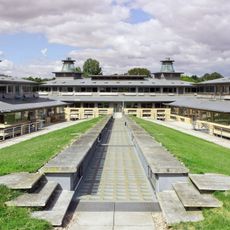
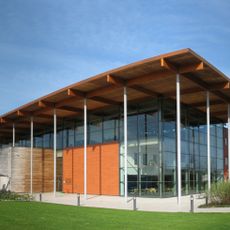
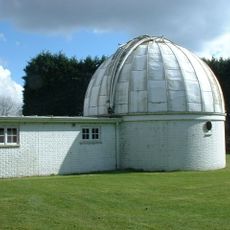
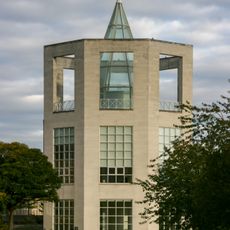
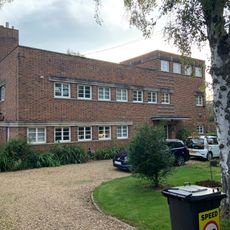
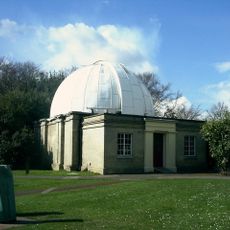
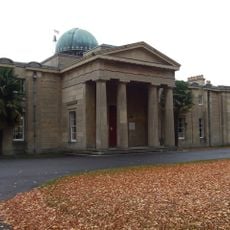
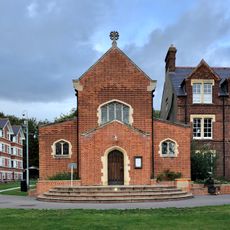
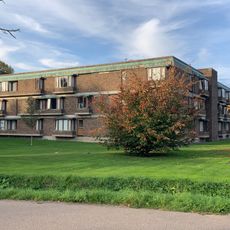
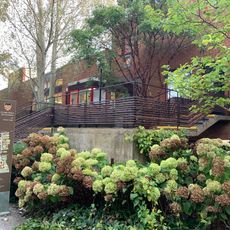
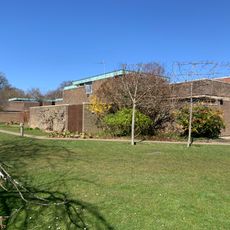
Cambridge Interferometer, Radio telescope and interferometer at Mullard Radio Astronomy Observatory, Cambridge, GB
The Cambridge Interferometer is a radio facility with multiple antennas spread across different locations that work together to capture and examine radio waves from space. The antenna elements are spaced apart so that when their signals are combined, they create sharper images and better detail than any single dish could achieve.
Martin Ryle and Antony Hewish built this interferometer in the early 1950s to map radio sources in the sky. Their work earned them the Nobel Prize in Physics in 1974 and helped establish radio astronomy as a major field of research.
The name reflects its function of combining radio signals through interference patterns. Visitors can still see how the antenna arrangement was designed to work together, showing the practical thinking behind capturing distant cosmic signals.
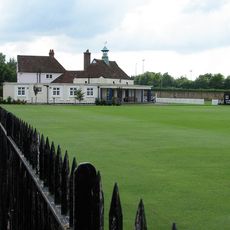
The site is located between Grange Road sports ground and Cavendish Laboratory and can be visited through guided tours organized by Cambridge University. It helps to check tour availability in advance, as the location is not freely accessible without a guide.
The facility produced two groundbreaking catalogs of radio sources known as the 2C at 81.5 MHz and the 3C at 159 MHz that changed how astronomers around the world study the cosmos. Researchers still consult these catalogs today as reference guides for radio astronomy.
The community of curious travelers
AroundUs brings together thousands of curated places, local tips, and hidden gems, enriched daily by 60,000 contributors worldwide.