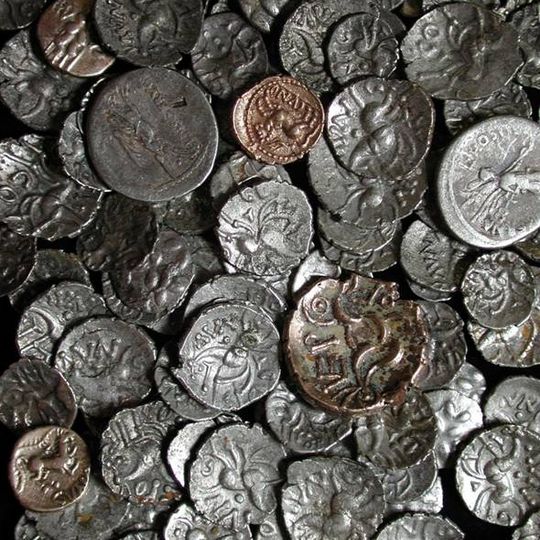
Hallaton Treasure, Archaeological discovery in Hallaton, United Kingdom
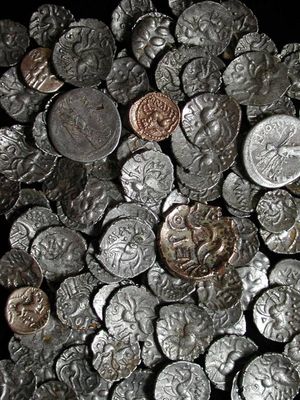
The Hallaton Treasure is an archaeological discovery from the Iron Age and Roman periods containing over 5,000 coins in silver and gold alongside other valuable objects including a gilded parade helmet. The collection also features numerous additional artifacts that show connections between these two historical eras.
The treasure was discovered in 2000 by Ken Wallace and his fieldwork team and includes the oldest known Roman coin found in Britain, dating to 211 BC. This discovery revealed important connections between the local Celtic culture and the Roman world.
The site served as an open-air shrine where the Corieltauvi people left ritual offerings and gifts. This sacred use reveals how meaningful this location was to the local community.
The complete collection can be viewed at the Harborough Museum in Market Harborough, Leicestershire, where the restored Roman Hallaton Helmet is also on display. This museum visit allows visitors to see all the artifacts together and learn more about their significance.
The collection contains roughly 4,835 Celtic coins from the Corieltauvi people, effectively doubling the total number of such coins previously recorded from this tribe. This made the discovery one of the most important for understanding Celtic coinage in Britain.
The community of curious travelers
AroundUs brings together thousands of curated places, local tips, and hidden gems, enriched daily by 92,332 contributors worldwide.