St. Pancras Renaissance London Hotel

Log in to your account

AroundUs is a community-driven map of interesting places, built by curious explorers like you. It grows with every review, story, and photo you share.
Connect to save your favorite spots, contribute locations, and create personalized routes.
By continuing, you accept our Terms and Conditions and our Privacy Policy
Add to collection
Map
Suggest a change
Share

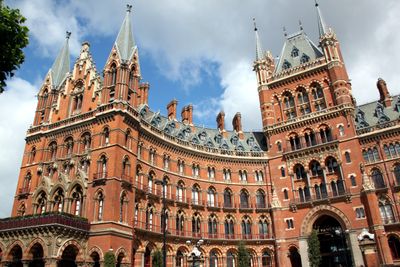
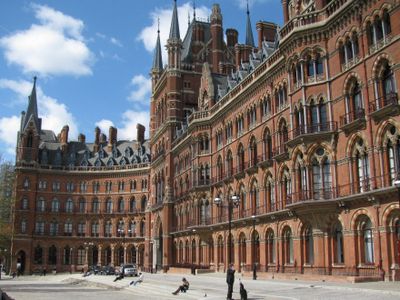
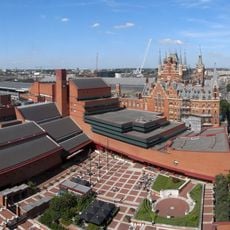
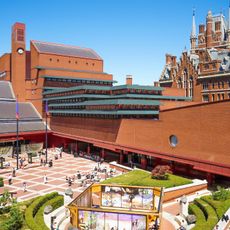
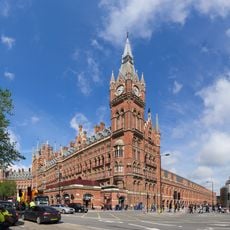
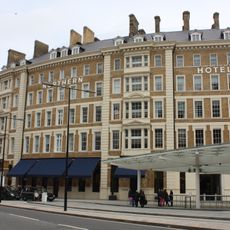
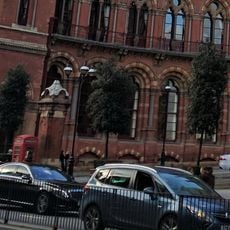
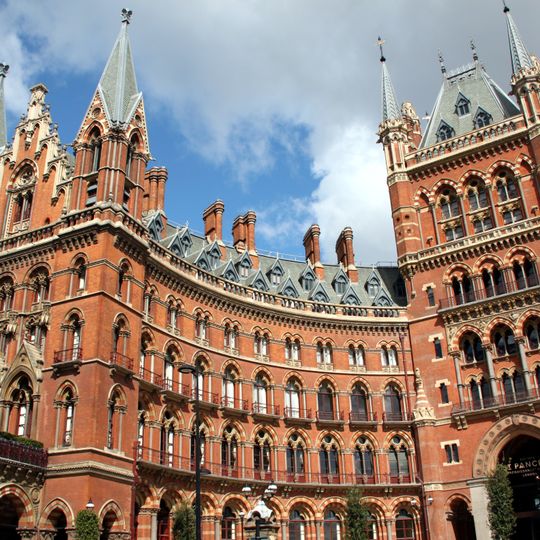
St. Pancras Renaissance London Hotel, Gothic Revival railway hotel in Camden, London, England.

This five-star hotel occupies a restored Victorian building featuring pointed arches, ornate stonework, a grand staircase, and a clock tower that rises 249 feet (76 meters) above Euston Road.

Designed by George Gilbert Scott and opened on May 5, 1873, the hotel originally served as the Midland Grand Hotel for railway passengers arriving at St Pancras Station.

The building has appeared in numerous films and music videos, including the Spice Girls' Wannabe, and remains a celebrated example of Victorian engineering and Gothic design in central London.

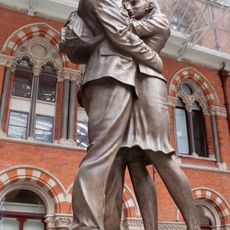
Located directly above St Pancras International Station and next to King's Cross, the hotel offers 207 rooms and easy access to Eurostar services and the London Underground at postcode NW1 2AR.

Despite proposals for demolition in the 1960s, preservation efforts led to its Grade I listing in 1967, and the building remained closed for decades before reopening in 2011 after extensive restoration work.

Location: London Borough of Camden

Inception: January 1, 1873

Architects: George Gilbert Scott

Official opening: May 5, 1873

Architectural style: Gothic Revival

Brand:

Operator: Marriott

Part of: St Pancras Station and former Midland Grand Hotel

Address: Euston Road NW1 2AR London

Phone: +442078413540

Website: http://marriott.co.uk/hotels/travel/lonpr-st-pancras

GPS coordinates: 51.53000,-0.12528

Latest update: December 1, 2025 08:45

Neogothic architecture: cathedrals, parliaments, universities

This collection presents neogothic architecture from the 19th and early 20th centuries, when architects across Europe, the Americas, Asia and Oceania revived medieval building forms. The movement began in Britain and spread worldwide, employing pointed arches, flying buttresses, ribbed vaults and stone spires. This architectural language was used for churches, universities, government buildings and railway stations. The collection includes religious structures like Cologne Cathedral and Notre-Dame Basilica in Montreal, government buildings such as the Parliament Complex in Ottawa and the Palace of Westminster in London, educational institutions like the University of Glasgow Main Building, and transport hubs including St. Pancras Station in London and Victoria Terminus in Mumbai. These structures demonstrate how architects adapted medieval techniques to modern building materials and functions.

Reviews

Visited this place? Tap the stars to rate it and share your experience / photos with the community! Try now! You can cancel it anytime.

« St. Pancras Renaissance London Hotel: Gothic Revival railway hotel in Camden, London, England » is provided by Around Us (aroundus.com). Images and texts are derived from Wikimedia project under a Creative Commons license. You are allowed to copy, distribute, and modify copies of this page, under the conditions set by the license, as long as this note is clearly visible.

Discover hidden gems everywhere you go!

From secret cafés to breathtaking viewpoints, skip the crowded tourist spots and find places that match your style. Our app makes it easy with voice search, smart filtering, route optimization, and insider tips from travelers worldwide. Download now for the complete mobile experience.

Around Us App Screenshot

A unique approach to discovering new places

Le Figaro

All the places worth exploring

France Info

A tailor-made excursion in just a few clicks

20 Minutes