Wimbledon Windmill, Historic windmill on Wimbledon Common, England.
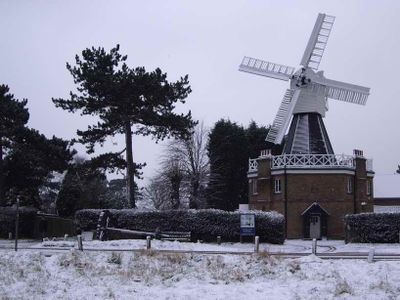
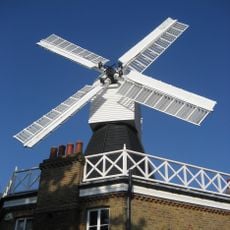
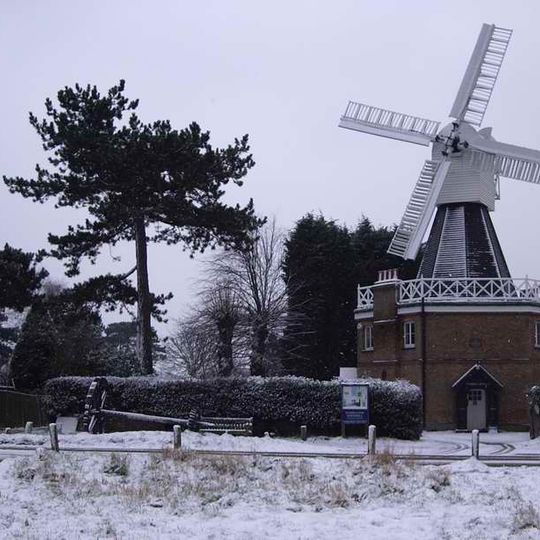
Wimbledon Windmill is a grain mill built in 1817 on Wimbledon Common, featuring an octagonal brick base topped with a white wooden upper structure and four sails. It now operates as a small museum open to the public during part of the year.
The mill was built in 1817 by carpenter Charles March and ground grain for the local area until 1864, when the miller was evicted by the Earl Spencer. The building then served as housing for many years before being converted into the museum that visitors see today.
The mill museum displays milling machinery, tools, and models across two floors that show how grain was processed by hand and by wind. Visitors can examine the original mechanisms up close and get a clear sense of how a working miller spent their days.
The museum is open on weekends and bank holidays between March and October, so it is worth planning your visit in advance. Inside, narrow stairs lead to the upper floors, which means people with limited mobility can only access the ground level.
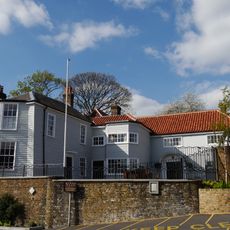
Robert Baden-Powell wrote parts of 'Scouting for Boys' in 1907 while staying at the Mill House, the cottage attached to the mill. The book went on to become the founding text of the Scout movement, making this quiet corner of the common an unlikely starting point for a worldwide organization.
The community of curious travelers
AroundUs brings together thousands of curated places, local tips, and hidden gems, enriched daily by 60,000 contributors worldwide.