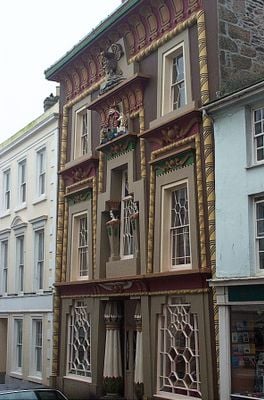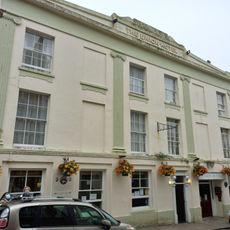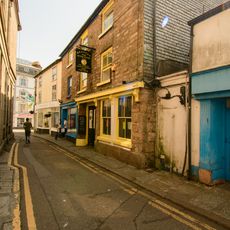
Egyptian House, Grade I listed building in Chapel Street, Penzance, England.
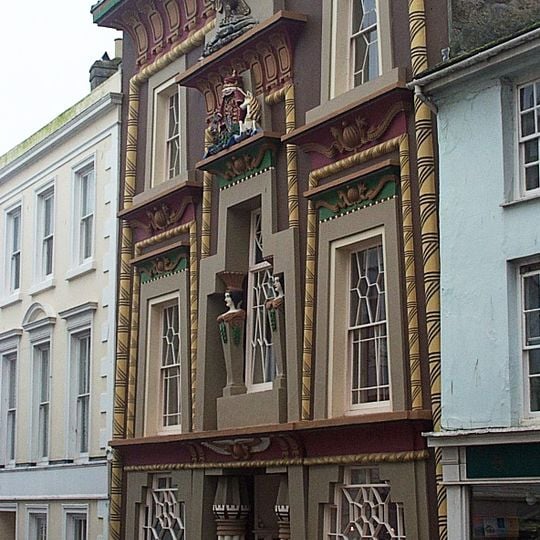
The Egyptian House is a Grade I listed building on Chapel Street in Penzance with a symmetrical three-story facade featuring Egyptian-style ornaments. The decorations include lotus-shaped capitals and hieroglyphic designs rendered in artificial stone across the entire front elevation.
The house was constructed in 1835 by mineralogist John Lavin, replacing two earlier cottages at the site. It served originally as a geological museum, displaying mineral collections that reflected the builder's scientific interests.
The building embodies the Egyptian Revival style that swept through England following Napoleon's Egyptian campaign, blending ancient Egyptian design elements with local architecture. Visitors today can observe how the ornate facade reflects the European fascination with ancient Egypt that shaped artistic tastes of the era.
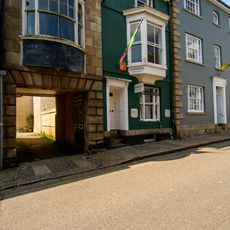
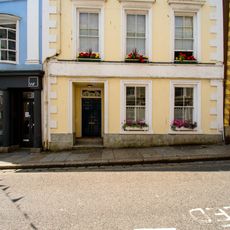
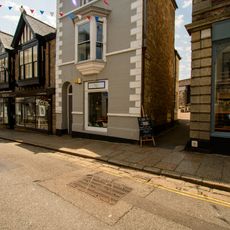
The building contains three separate apartments managed by the Landmark Trust with two commercial spaces occupying the ground floor. The facade is accessible from street level, allowing visitors to view the architectural details from different vantage points.
The facade features original Coade stone ornaments, a specialized artificial material produced in London during the Georgian period. This durable material was a technical innovation that allowed architects to create detailed decorations that have endured to the present day.
The community of curious travelers
AroundUs brings together thousands of curated places, local tips, and hidden gems, enriched daily by 91,384 contributors worldwide.